EPR Laws Impact: Why Contamination is Becoming a Compliance Issue
Overview
Extended Producer Responsibility (EPR) laws and other recycling regulations are accelerating across the U.S. and globally. For businesses, these changes aren’t just about paying new fees or reporting packaging use – they’re also tied directly to recycling contamination rates.
With regulators, producers, and municipalities all pushing for cleaner streams, contamination has moved from a cost issue to a compliance and reputational issue. This article explores what EPR means for businesses today, how regulations are shaping contamination reduction, and what steps companies should take to stay ahead.
What EPR Means for Businesses
Extended Producer Responsibility (EPR) policies shift the responsibility for packaging waste management from municipalities to the producers who place products on the market. In practice, this means manufacturers, distributors, and retailers are now financially and operationally responsible for collecting, processing, and recycling the packaging they introduce.
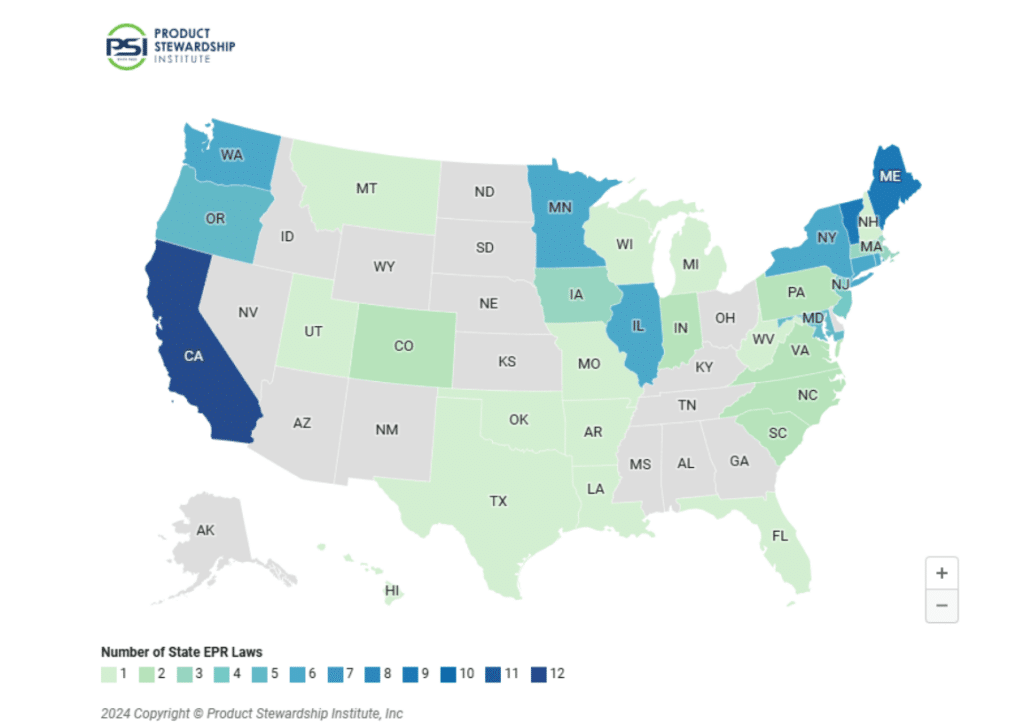
In the USA, states including California, Oregon, Maine, and Colorado have already implemented EPR laws for packaging, with more states drafting legislation. Internationally, the European Union is tightening its Packaging and Packaging Waste Directive (PPWD), setting stricter recycling and contamination targets.
For businesses, the key takeaway is this: your recycling performance and contamination rates are now under the microscope. If contaminated streams reduce recycling yield, the costs come back to producers – and in many cases, large commercial generators.
How Regulations Are Driving Cleaner Recycling Streams
EPR systems rely on achieving specific recycling rate targets. But contamination – from food waste in paper bins, plastics mixed with non-recyclables, or “wish-cycling” items like coffee cups – undermines those targets.
That’s why regulators and producer responsibility organizations (PROs) are setting new contamination thresholds.
For example:
- Oregon’s Plastic Pollution and Recycling Modernization Act requires haulers and processors to meet contamination limits to access funding.
- The EU has set ambitious 2030 packaging recyclability goals, requiring designs and collection systems that reduce contamination at the source.
This regulatory push creates a direct incentive: if businesses can’t keep streams clean, they may face penalties, increased fees, or be forced to invest in contamination reduction programs.
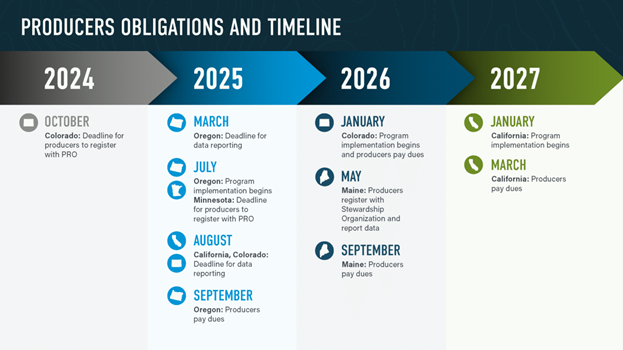
Here is the timeline for EPR packaging compliance in the United States:
Timeline by swca.com
Why Contamination Is Becoming a Compliance Issue (Not Just a Costly Mistake)
Historically, contamination was viewed mainly as a financial issue – contaminated loads meant higher hauling fees, rejected recycling, and lost revenue from recyclables. But under EPR, contamination now carries compliance risks as well:
- Regulatory fines: Businesses may be penalized if their waste streams repeatedly fail contamination standards.
- Producer fees: Brands may face higher eco-modulated fees for packaging that tends to cause contamination.
- Reputation risk: Companies with poor recycling performance could see negative impacts in ESG reporting and stakeholder trust.
Put simply: contamination has moved from being a “back-of-house operational problem” to being a visible compliance and reputational challenge that business leaders need to address.
Preparing Your Business for Regulatory Success
The good news is that businesses, like a building cleaning business, can take proactive steps to reduce contamination and stay ahead of EPR compliance:
- Waste Audits: Regular facility audits identify where contamination occurs most often (e.g. break rooms, shipping areas, retail floors).
- Employee Training: Clear communication and signage reduce “wish-cycling” behaviors and help staff know what not to recycle.
- Stream Optimization: In some cases, shifting from single-stream to dual-stream or adding separate organics bins can significantly reduce contamination.
- Monitoring Tools: Emerging tech – including smart bins with sensors and contamination monitoring apps – provide real-time insights into recycling quality.
By investing in these measures, businesses not only avoid compliance issues but also lower waste costs and improve ESG performance.
 BIC License #1496