Peak Season Waste Planning for Logistics Operations

Table of Contents
The holiday shipping season, promotional events, and e-commerce surges can dramatically increase waste generation at warehouses and fulfillment centers. As shipping volumes rise, logistics companies often see significant increases in cardboard, plastic packaging, pallets, and general waste – creating challenges that standard waste services may not be equipped to handle.
While most logistics operations carefully prepare for increased labor, inventory, and transportation demands, waste management is often overlooked until problems arise. A proactive waste strategy helps companies adjust services, add temporary capacity, and avoid costly disruptions during their busiest periods.
Quick Hits: What You Need to Know
- Peak shipping seasons can significantly increase warehouse waste.
- Many logistics facilities underestimate seasonal waste increases.
- Temporary dumpsters, compactors, balers, and recycling equipment can help warehouses manage short-term waste surges.
- Proactively adjusting pickup schedules can prevent overflowing containers, emergency hauling fees, and safety issues.
- Improving recycling and diversion strategies during peak season can reduce landfill costs while maximizing the value of recyclable materials.
- Working with an experienced waste management partner helps logistics companies coordinate seasonal service changes.
Why Peak Shipping Seasons Create Waste Surges
For logistics companies, peak season represents one of the most demanding periods of the year. Holiday shopping, major promotions, and increased e-commerce activity can push warehouses and fulfillment centers to operate at maximum capacity.
However, increased shipping volume does not only affect inventory and transportation – it also creates a substantial increase in waste generation.
Packaging materials are typically the largest contributor to seasonal waste increases. As more products move through fulfillment centers, facilities generate larger amounts of:
- Corrugated cardboard from shipping boxes and packaging materials
- Plastic film and shrink wrap used to secure products and pallets
- Pallets and wood materials from inbound shipments
- General waste from damaged products, excess materials, and daily operations
Many logistics companies underestimate these increases because their waste programs are built around normal operating conditions. A dumpster or compactor that works effectively during regular operations may quickly become insufficient when order volumes surge.
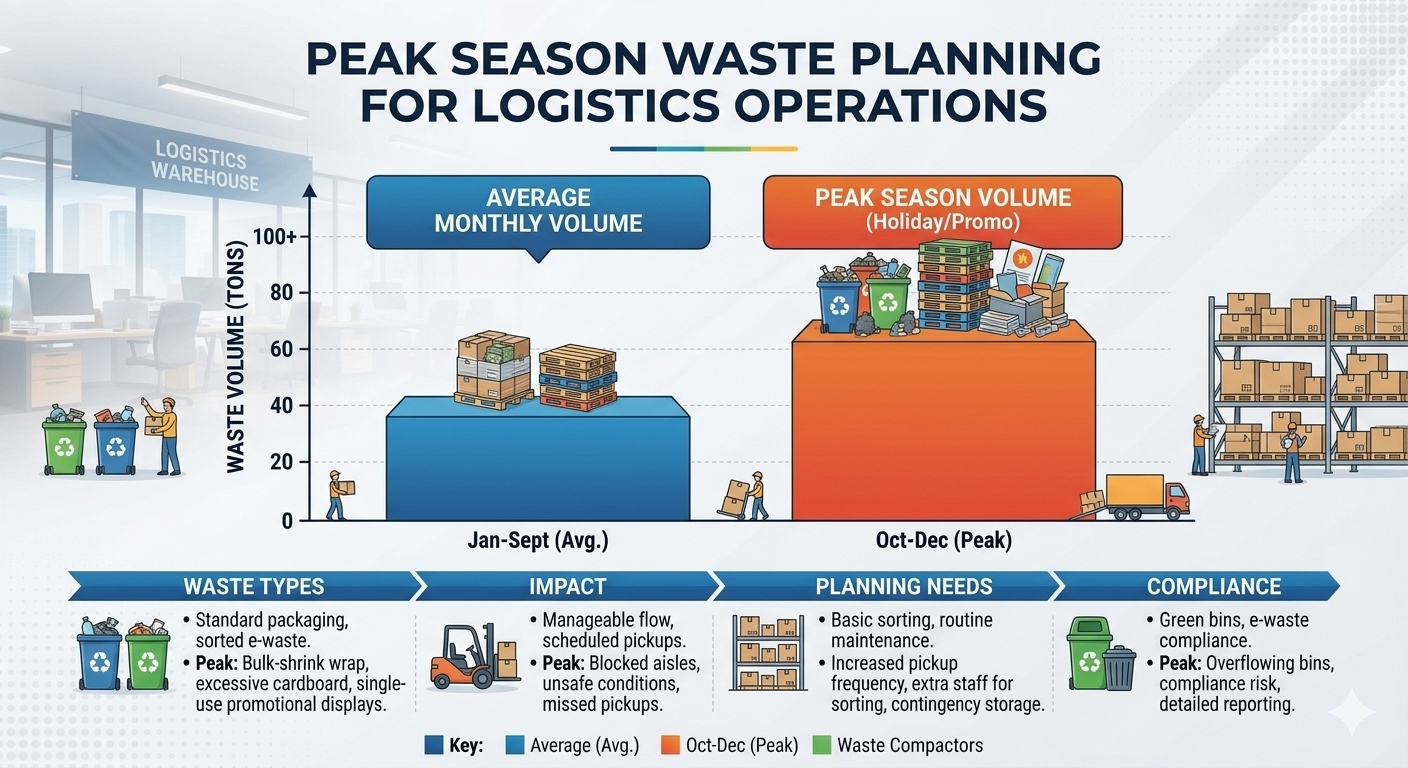
When waste services cannot keep up, facilities may experience overflowing containers, additional hauling fees, employee safety concerns, and disruptions around loading docks or warehouse workflows.
Temporary Equipment That Supports Seasonal Growth
One of the most effective ways logistics companies can prepare for seasonal waste increases is by adding temporary equipment that provides additional capacity when demand rises.
Temporary waste solutions allow facilities to scale services up during busy periods and return to normal operations once peak demand declines.
Depending on the facility’s needs, seasonal solutions may include:
Temporary dumpsters and roll-off containers: Additional containers provide extra capacity for cardboard, packaging materials, and general waste during short-term volume increases.
Balers and compactors: Facilities generating large amounts of cardboard, plastic film, or general waste may benefit from equipment that reduces waste volume, improves storage efficiency, and potentially increases recycling value.
Additional recycling containers: Expanded recycling capacity can help prevent valuable materials from being placed in trash containers simply because existing recycling equipment becomes overwhelmed.
The right solution depends on facility size, available space, waste composition, and expected growth. A distribution center handling consumer products may require a different approach than a warehouse managing industrial materials.
Planning equipment needs before peak season begins gives companies greater control over costs and reduces the likelihood of operational disruptions.
Avoiding Overflow During High-Volume Periods
Overflowing dumpsters are more than a visual problem – they can create safety, efficiency, and compliance challenges.
When containers reach capacity, employees may begin placing materials outside dumpsters or around loading areas. This creates clutter, increases workplace risks, and can interfere with warehouse operations.
For logistics facilities, maintaining organized workspaces is critical. Waste accumulation near loading docks, staging areas, or employee pathways can slow productivity and create unnecessary obstacles.
Preventing overflow starts with understanding actual waste generation patterns. Companies should evaluate:
- Previous peak season waste volumes
- Expected increases in shipping activity
- Current container capacity and pickup frequency
- Opportunities to increase recycling and reduce landfill disposal
Communication between facility managers, operations teams, and waste providers is also essential. Making adjustments before problems occur allows businesses to avoid emergency pickups and maintain smoother operations.
Adjusting Pickup Schedules Before Problems Occur
Many businesses wait until containers are overflowing before requesting additional waste services. Unfortunately, reactive solutions are often more expensive and less efficient than proactive planning.
During peak shipping periods, logistics companies may need to temporarily increase pickup frequency to match higher waste generation. A facility that normally receives weekly service may require multiple pickups per week during the busiest months.
Flexible service adjustments may include:
- Increasing collection frequency during high-volume periods
- Adding temporary pickups around major promotions or deadlines
- Adjusting container sizes based on changing waste volumes
- Expanding recycling services to handle additional materials
The goal is not simply adding more services – it is creating a waste program that matches actual operational needs.
By reviewing historical waste trends and forecasting future demand, logistics companies can balance service reliability with cost control.
Returning to Normal Service After Peak Season
While preparing for peak season is important, returning to normal operations is equally valuable.
Once shipping volumes decline, logistics companies should reassess their waste requirements. Temporary containers can be removed, pickup schedules can be adjusted, and equipment levels can be optimized based on new waste volumes.
Continuing peak-level services after demand decreases can result in unnecessary costs. A post-season review helps businesses identify what worked, what challenges occurred, and how future peak periods can be managed more effectively.
Companies should evaluate:
- Which facilities experienced the largest waste increases
- Whether temporary equipment provided sufficient capacity
- Whether recycling opportunities were maximized
- Whether service levels matched operational needs
This continuous improvement approach allows logistics companies to build stronger waste strategies year after year.
Conclusion
Peak shipping seasons create unique challenges for logistics operations, but waste management does not have to become one of them. With proactive planning, flexible service options, and the right equipment strategy, companies can handle increased waste volumes while keeping facilities efficient and operational.
National Waste Associates helps logistics organizations build scalable waste programs that adapt to seasonal demand, reduce unnecessary costs, and improve waste performance across all locations.
Preparing for an upcoming peak season? NWA can help your logistics organization create a flexible waste management strategy designed around your seasonal needs. From temporary equipment to service optimization, our team can help you manage increased waste volumes without unnecessary disruptions.
Learn more about our waste & recycling services by
calling 888-692-5005 x6 or sending us an
email at sales@nationalwaste.com
Frequently Asked Questions
Waste increases vary by facility and shipping volume, but logistics operations often experience significant growth in cardboard, plastic packaging, and general waste during holiday and promotional periods. Reviewing historical waste data can help companies better prepare for seasonal demand.
Temporary solutions may include additional dumpsters, roll-off containers, compactors, balers, recycling containers, and increased pickup frequencies. The right solution depends on the facility’s waste types, available space, and expected volume increase.
Companies can prevent overflow by reviewing previous peak periods, forecasting expected waste increases, adjusting service schedules, and adding temporary capacity before containers become overloaded.
Yes. Peak shipping periods often generate large amounts of recyclable packaging materials. Expanding recycling capacity can reduce landfill costs and help businesses recover value from materials like cardboard and plastic film.
Planning should begin well before seasonal demand increases. Reviewing waste volumes and coordinating service adjustments weeks or months in advance allows businesses to avoid disruptions during their busiest periods.
Yes. National Waste Associates helps multi-location logistics companies coordinate vendors, optimize service levels, identify savings opportunities, and create consistent waste management strategies across facilities.
 BIC License #1496