The Hidden Cost of Going Green

Table of Contents
Quick Hits: What You Need to Know
- Recycling and waste diversion programs can introduce hidden costs if not properly managed
- Contamination fees are one of the fastest-growing expenses in commercial recycling programs
- Recycling processing costs have increased significantly in recent years due to labor and commodity market shifts
- Vendor “sustainability” or environmental surcharges are often vague and poorly explained
- Operational inefficiencies – like over-servicing or poor signage – can quietly inflate costs
- Successful sustainability programs balance environmental goals with financial oversight and transparency
For many businesses, “going green” has become a core part of their brand identity – a way to demonstrate environmental responsibility while appealing to eco-conscious customers and stakeholders. Recycling programs, waste diversion goals, and zero-waste initiatives are now considered best practices across industries.
However, beneath the surface of these well-intentioned programs, many companies discover something unexpected: hidden costs that quietly erode their savings. From contamination charges to inflated processing fees and vendor “sustainability surcharges,” these unseen expenses can quickly turn a cost-saving initiative into a budget drain.
This article explores where those costs hide, why they’ve become more common in recent years, and what businesses can do to ensure their sustainability efforts actually deliver financial as well as environmental value.
The Rising Cost of ‘Green’ Programs
The economics of recycling have changed dramatically in the past decade. Once a revenue-generating activity for waste haulers and municipalities, recycling is now often an expense due to global market shifts and stricter quality standards.
According to a 2024 Waste Business Journal report, average recycling processing costs have increased by over 25% since 2020, driven largely by rising labor costs, contamination, and fluctuating commodity values. When markets for mixed paper and plastics collapse – as they did following China’s National Sword policy – these costs often get passed on directly to customers.
For businesses, that means recycling line items on invoices that are higher than landfill disposal costs – a surprise that can lead to confusion or frustration when sustainability doesn’t translate to savings.
Contamination Fees: The Hidden Recycling Penalty
Recycling contamination – when non-recyclable materials end up in recycling bins – has become one of the most common sources of hidden costs in waste programs.
Most recycling facilities now impose contamination surcharges when loads contain more than a few percent of incorrect materials. Even a small amount of food waste, shrink wrap, or polystyrene can cause an entire load to be rejected, forcing haulers to divert it to landfill at premium “rejected load” rates.
Businesses often aren’t notified until the charges appear on their invoices. These fees may be listed under vague terms like “processing adjustment,” “load rejection,” or “contaminated materials fee.”
Typical contamination surcharges can range from $75 to $250 per incident, depending on the hauler and region. For multi-location operations, this can quickly add up to thousands in unnecessary expenses each month.
Vendor Markups and Sustainability Surcharges
Another layer of hidden cost comes from vendor markups on recycling services marketed as “green initiatives.”
Many haulers apply blanket “environmental recovery” or “sustainability” fees – typically 3%–6% of total monthly charges – which are not tied to any specific service. These add-ons often sound legitimate, but in reality, they can be arbitrary profit mechanisms.
Even worse, recycling costs are frequently blended into bundled waste service agreements, making it impossible for clients to distinguish what they’re truly paying for recycling versus disposal.
Transparency varies widely by vendor, but for most businesses, invoice opacity is the rule, not the exception. Without line-item breakdowns and regular audits, it’s nearly impossible to identify unnecessary markups or double-billed charges.
When Recycling Becomes a Logistics Burden
Beyond the financial fees, there are also operational costs associated with poorly optimized recycling programs.
For example, a company that adds multiple recycling containers at each location without adjusting pickup frequency or training staff may find themselves paying for half-empty hauls or high contamination rates.
Similarly, inconsistent labeling, lack of staff education, and insufficient oversight can lead to inefficiencies – turning what should be a sustainability win into an administrative headache.
These indirect costs often go unnoticed until a company conducts a full waste audit or benchmarks site-by-site performance.
Common examples of hidden operational costs include:
- Over-servicing (too many pickups or containers for actual recycling volume)
- Contaminated or mixed loads increasing processing charges
- Staff time lost to sorting errors or poor signage
- Inefficient vendor routing and coordination
Regulatory & Reporting Pressures Add Complexity
As states and municipalities push new recycling mandates, Extended Producer Responsibility (EPR) programs, and landfill bans, businesses are shouldering additional compliance and reporting responsibilities.
Several states – including California, Maine, and Oregon – have rolled out new EPR legislation that directly affects how businesses must report packaging waste and fund recycling programs.
While these initiatives aim to improve sustainability, they also introduce new administrative costs and potential fines for noncompliance. Many waste vendors charge extra for compliance management or regulatory reporting – often under line items like “Program Participation Fee” or “State Recycling Recovery Charge.”
For national brands, staying compliant across multiple jurisdictions can require significant oversight and cross-departmental coordination, especially when vendors apply different standards state by state.
Here is a U.S. map that shows the number of state EPR laws:
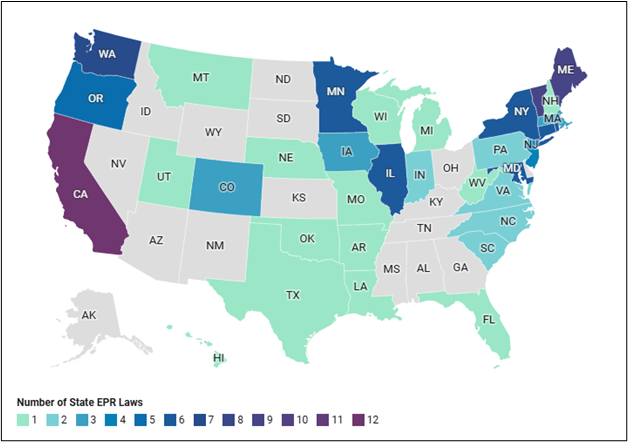
Map provided by Product Stewardship Institute
How NWA Can Help Businesses Control Recycling Costs
At National Waste Associates, we recognize that sustainability shouldn’t come at the expense of profitability.
Our team specializes in uncovering hidden waste and recycling fees, auditing vendor invoices, and identifying cost-reduction opportunities that don’t compromise your environmental goals.
By proactively managing recycling contracts, monitoring contamination trends, and leveraging our national vendor network, we help clients maintain compliance, transparency, and cost efficiency – all while supporting their corporate sustainability objectives.
Our data-driven reporting tools and expert contract negotiation ensure you never pay more than necessary for your recycling or diversion programs. The result? A truly sustainable program – both environmentally and financially.
Conclusion: Green Goals, Clear Costs
Going green is not just about doing what’s right for the planet, it’s about making smart, sustainable business decisions.
By understanding where hidden recycling and diversion fees lurk, companies can align their environmental goals with financial responsibility. With the right oversight and partnership, it’s entirely possible to achieve both.
Sustainability initiatives should support your bottom line – not quietly drain it. A closer review of your recycling program may uncover opportunities to reduce hidden costs while strengthening your environmental strategy.
Learn more about our waste & recycling services by
calling 888-692-5005 x6 or sending us an
email at sales@nationalwaste.com
Frequently Asked Questions (FAQ)
These are additional charges added by waste vendors, often labeled as environmental recovery, sustainability, or carbon-related fees intended to offset operational or compliance costs.
Not always. Unlike taxes or certain regulatory surcharges, many environmental or carbon fees are vendor-defined and can vary widely between providers.
Many environmental fees are tied to overall service costs or vendor pricing structures, meaning they rise as base hauling and disposal costs increase.
Sometimes – but not always transparently. In many cases, vendors provide little documentation showing how these funds are used or whether they directly support measurable environmental programs.
Reviewing invoices carefully, requesting fee breakdowns, and comparing charges across vendors or locations can help uncover inconsistencies or inflated costs.
Different vendors, regions, and contract structures often create inconsistent fee applications across locations, making hidden charges harder to detect at scale.
National Waste Associates audits invoices, evaluates environmental-related surcharges, negotiates unjustified fees, and helps businesses build transparent, cost-effective sustainability programs.
 BIC License #1496
