The Hidden Cost of Jobsite Downtime Caused by Waste Hauling Delays

Table of Contents
Quick Hits: What You Need to Know
- Waste hauling delays can stall construction schedules just as seriously as labor or material shortages
- Overflowing dumpsters reduce staging space, limit site access, and create safety hazards
- Delayed haul-offs often impact subcontractor productivity and sequencing across trades
- Multi-vendor coordination failures are a common source of jobsite inefficiency
- Contaminated loads and poorly planned pickups can trigger unexpected downtime and added costs
- Proactive waste scheduling and centralized coordination help keep projects moving on time
In construction, time is money – and downtime is one of the fastest ways for costs to spiral out of control.
Project managers spend enormous amounts of time planning around labor schedules, material deliveries, inspections, and weather disruptions. Yet one operational issue often receives far less attention despite its direct impact on productivity: waste hauling delays.
An overflowing roll-off container may seem like a minor inconvenience at first. But on an active construction site, delayed waste removal can quickly create a chain reaction of operational problems – restricting access, disrupting workflows, slowing subcontractors, and creating safety concerns that jeopardize schedules.
For construction firms operating under tight deadlines and shrinking margins, waste logistics are no longer just a cleanup issue. They’re a critical component of project efficiency.
Why Waste Delays Become Construction Delays
Construction sites depend on constant movement.
Trades need clear access to work areas, staging zones must remain functional, and debris must be removed continuously to maintain safe and efficient operations. When waste removal falls behind, those systems begin to break down.
Overflowing containers reduce available space, create congestion, and interfere with material handling. In many cases, subcontractors are forced to work around accumulated debris, slowing productivity and increasing frustration across the site.
What starts as a missed haul can quickly evolve into:
- Delayed trade sequencing
- Restricted equipment movement
- Missed project milestones
The impact becomes even more severe on urban projects or tight-footprint jobsites where space is already limited.
The Real Cost of Overflowing Roll-Off Containers
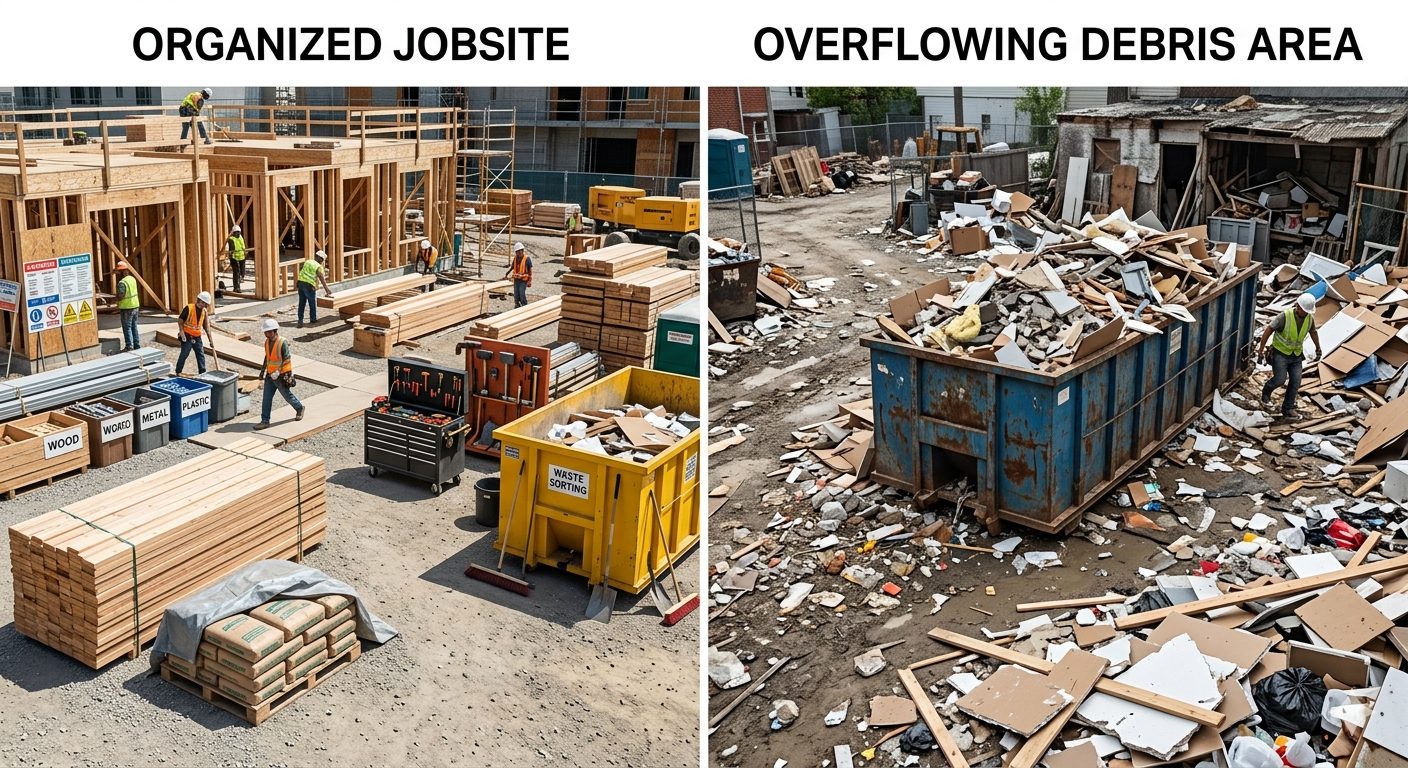
Overflowing dumpsters create more than just visual clutter. When containers exceed capacity, crews often resort to piling debris nearby, blocking staging areas or access routes. This creates inefficiencies that ripple throughout the project.
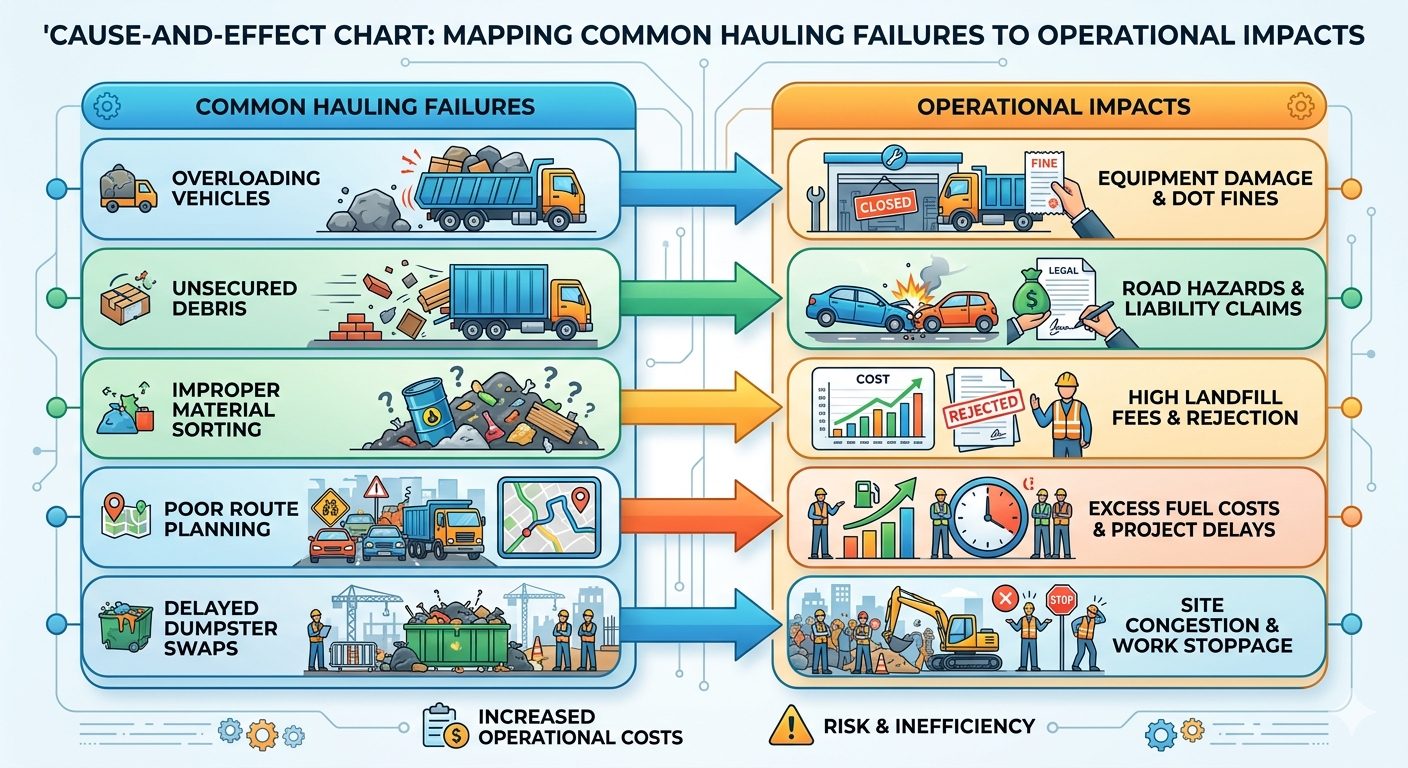
The financial impact is rarely isolated to hauling itself. Labor downtime, emergency service requests, and reduced site efficiency can all contribute to higher project costs.
In some cases, overloaded containers can also violate local transportation or safety regulations, leading to rejected pickups or additional charges from haulers.
These operational disruptions are often difficult to measure directly – but they can quietly erode profitability over the course of a project.
How Debris Impacts Trade Productivity
Every trade on a construction site depends on logistics. Electricians, framers, plumbers, drywall crews, and finish contractors all require safe, accessible workspaces to operate efficiently. Excess debris disrupts that flow.
When waste accumulates, crews spend more time navigating around obstructions, material staging becomes less efficient, and equipment access becomes increasingly difficult.
Over time, even small inefficiencies compound into measurable productivity losses. This is especially problematic on fast-paced commercial projects where multiple trades overlap and timelines leave little room for delays. A site that becomes congested with debris can quickly slow progress across several phases simultaneously.
Common Causes of Hauling Bottlenecks on Jobsites
Waste hauling delays rarely happen for just one reason. More often, they result from coordination gaps between project teams, vendors, and changing site conditions. Some of the most common causes include:
- Poor forecasting of debris volume during different construction phases
- Inconsistent communication between site supervisors and haulers
- Delayed pickups caused by overloaded or contaminated containers
As construction activity accelerates, these issues become harder to manage reactively. Without proactive oversight, hauling delays often compound at the exact moment projects are trying to move fastest.
Why Multi-Vendor Coordination Fails on Large Projects
Large construction projects often involve multiple waste vendors operating simultaneously. One vendor may handle general debris, another recycling, and another specialty materials such as concrete or metal. While this structure can work, fragmented coordination often creates inefficiencies as projects become more complex.
Each vendor operates with different schedules, communication systems, and service expectations. As site conditions change, maintaining alignment becomes increasingly difficult.
This fragmentation frequently leads to missed pickups, inconsistent service levels, and limited visibility into overall hauling performance. Without centralized coordination, project teams often spend valuable time troubleshooting vendor issues instead of focusing on construction operations.
Preventing Site Shutdowns and Safety Violations
Waste buildup is not just a productivity issue – it’s also a safety and compliance concern. Overflowing debris areas can create trip hazards, obstruct emergency access routes, and increase fire risks. In some cases, poor site conditions may trigger OSHA concerns or fail inspections.
Municipal regulations and site safety requirements often mandate clear pathways, controlled debris management, and proper waste containment. When hauling delays prevent compliance, projects risk citations, fines, or temporary shutdowns. For construction executives, preventing these issues is just as important as controlling hauling costs.
How Centralized Waste Coordination Improves Jobsite Efficiency
As projects become larger and more complex, many construction firms are shifting toward centralized waste coordination models. Rather than relying on disconnected vendor relationships across multiple jobsites, centralized management creates a more structured approach to scheduling, reporting, and vendor oversight.
This improves pickup consistency, increases visibility into hauling activity, and reduces the administrative burden placed on superintendents and project managers. It also allows construction teams to respond faster when site conditions change – helping prevent small hauling issues from turning into major operational delays.
Best Practices for Proactive Waste Scheduling
The most effective construction waste programs are proactive – not reactive. Successful projects incorporate waste logistics into broader site planning from the beginning, rather than treating hauling as an afterthought. Best practices often include:
- Forecasting debris generation by construction phase
- Adjusting container counts and haul frequency proactively
- Maintaining centralized communication between vendors and site teams
Regular monitoring is also essential. Waste volumes can change rapidly depending on project stage, subcontractor activity, and schedule acceleration. Programs that aren’t actively managed can quickly fall behind operational demands.
The Bottom Line: Waste Logistics Directly Impact Project Performance
Construction companies spend enormous resources managing labor, materials, and scheduling – but waste logistics are often overlooked until problems emerge. By that point, delays, congestion, and productivity losses may already be affecting the project.
The reality is that waste hauling is deeply connected to jobsite efficiency. When containers overflow, pickups are delayed, or vendors fall out of sync, the impact reaches far beyond housekeeping.
The most successful construction firms recognize that proactive waste management is part of operational strategy – not just disposal.
That’s where structured coordination becomes essential. By centralizing vendor management, improving scheduling visibility, and proactively monitoring hauling activity, construction companies can reduce downtime and keep projects moving efficiently.
Partners like National Waste Associates help support this process by coordinating waste services across jobsites, managing vendor performance, and ensuring construction teams have the responsiveness and visibility needed to avoid costly disruptions.
Waste delays don’t just create clutter – they create costly downtime. A more proactive approach to hauling coordination can help keep projects safer, cleaner, and on schedule.
Learn more about how NWA can help your construction firm
streamline and optimize its waste management by
calling 888-692-5005 x6 or sending us an
email at sales@nationalwaste.com
Frequently Asked Questions (FAQ)
Delayed pickups and overflowing containers can restrict access, slow subcontractor productivity, reduce staging space, and disrupt trade sequencing across the site.
Common causes include poor debris forecasting, overloaded containers, vendor coordination issues, contaminated recycling loads, and limited haul-off availability during busy periods.
Overflowing debris creates trip hazards, blocks emergency access routes, increases fire risk, and may contribute to OSHA or inspection violations.
Excess debris reduces workspace efficiency, limits equipment movement, and forces trades to spend additional time navigating around obstructions.
Proactive scheduling involves forecasting debris volume, adjusting service levels by project phase, and coordinating pickups before containers become overloaded.
National Waste Associates helps coordinate hauling schedules, manage vendors, improve visibility across jobsites, and reduce operational disruptions caused by waste management inefficiencies.
 BIC License #1496