Unseen Permit & Regulatory Fees: What Your Waste Vendor Might Be Billing You Without Clarity

Table of Contents
Quick Hits: What You Need to Know
- Permit and regulatory fees are often buried within waste invoices under vague line items
- Many businesses unknowingly overpay due to bundled fees, markups, or automatic escalators
- Regulatory costs vary significantly by state and region
- Multi-location businesses are especially vulnerable to inconsistent fee structures
- Lack of invoice transparency makes benchmarking and auditing difficult
- Regular invoice reviews can uncover thousands in hidden annual costs
Waste management invoices are rarely as simple as they seem. Many businesses focus on the headline costs – trash pickup, container rentals, or recycling services – but fail to notice smaller line items that quietly inflate their bills. Among the most overlooked charges are permit and regulatory fees. These fees, often buried under ambiguous invoice headings, can add hundreds or even thousands of dollars per year to a company’s waste spend.
What makes these fees particularly insidious is their lack of transparency. Many vendors pass regulatory costs through without explanation, and some even apply markups on top of the base fees. Businesses rarely receive a clear breakdown, making it difficult to know whether they are being charged fairly. Understanding the scope and mechanics of these charges is essential to controlling waste budgets and avoiding unnecessary expenses.
What Are Permit & Regulatory Fees?
Permit and regulatory fees are charges that waste vendors pay to local, state, or federal authorities to comply with environmental laws, landfill permits, recycling mandates, and other regulations. These costs are legitimate, but how they are applied on invoices often isn’t transparent.
Vendors typically classify them under labels like “environmental surcharge,” “regulatory fee,” or “permit recovery.” While the names vary, the effect is the same: businesses are expected to cover costs that may fluctuate based on government rules, operational changes, or even vendor discretion.
These fees cover a range of items, including:
- Local permits for operating vehicles or containers.
- Environmental compliance costs, such as emissions monitoring, water runoff management, or landfill inspections.
- Recycling program mandates, including reporting, processing, and documentation fees.
- State-level surcharges for hazardous materials, electronic waste, or organic disposal programs.
Why Businesses Often Overpay
Many businesses overpay for permit and regulatory fees because vendors do not provide detailed documentation or breakdowns. Common practices that contribute to unnecessary spending include:
- Bundled line items: Fees are grouped under broad headings, leaving businesses unable to verify individual charges.
- Automatic escalators: Vendors include clauses in contracts allowing fees to rise without explanation.
- Markups on pass-through costs: Some vendors charge more than the actual permit or regulatory cost, effectively generating hidden profit.
- Regional or location-based discrepancies: A company with multiple locations may pay different rates for the same service, but invoices rarely clarify why.
Without oversight, these small additions can accumulate rapidly, adding thousands of dollars in hidden expenses annually.
How Regulatory Fees Vary by Region
Permit and regulatory fees aren’t uniform. They fluctuate depending on state and local regulations, landfill or processing facility requirements, and even municipal recycling mandates.
Example regional differences:
- California has stringent environmental reporting rules and landfill disposal requirements, resulting in higher permit and regulatory fees.
- Midwestern states often have lower regulatory costs due to more lenient landfill permitting and fewer environmental mandates.
- Northeast regions may impose additional fees for transportation and handling of waste due to population density and limited landfill capacity.
Understanding regional variability is key for businesses with multiple facilities. What looks like a modest per-ton or per-container fee can multiply when applied across several locations or over long-term contracts.
Examples of Permit & Regulatory Fees in Action
Consider a mid-sized retail company that generates 50 tons of waste monthly. Their invoice includes:
- Environmental compliance surcharge: $120/month
- Local landfill permit recovery: $80/month
- State recycling mandate fee: $50/month
Individually, each fee might seem minor, but collectively, the business is paying $3,000 annually for costs that may not have been fully justified or explained.
Another common scenario involves contract renewals. Vendors often adjust permit or regulatory fees at renewal, citing increased government charges or “compliance updates.” Businesses rarely receive invoices detailing these changes, so increases can go unnoticed until the contract is renewed or the first audit occurs.
The Impact of Hidden Permit & Regulatory Fees
Hidden permit and regulatory fees impact businesses in several ways:
- Budget unpredictability: Fees that fluctuate with little notice make long-term budgeting difficult.
- Erosion of trust: Lack of transparency can damage vendor relationships.
- Cumulative cost increases: Small monthly fees multiply over multiple facilities and years.
- Difficulty benchmarking: Without detailed breakdowns, businesses cannot compare costs with industry norms or negotiate effectively.
Over time, a business that doesn’t monitor these fees may spend tens of thousands of dollars more than necessary, undermining operational efficiency and profitability.
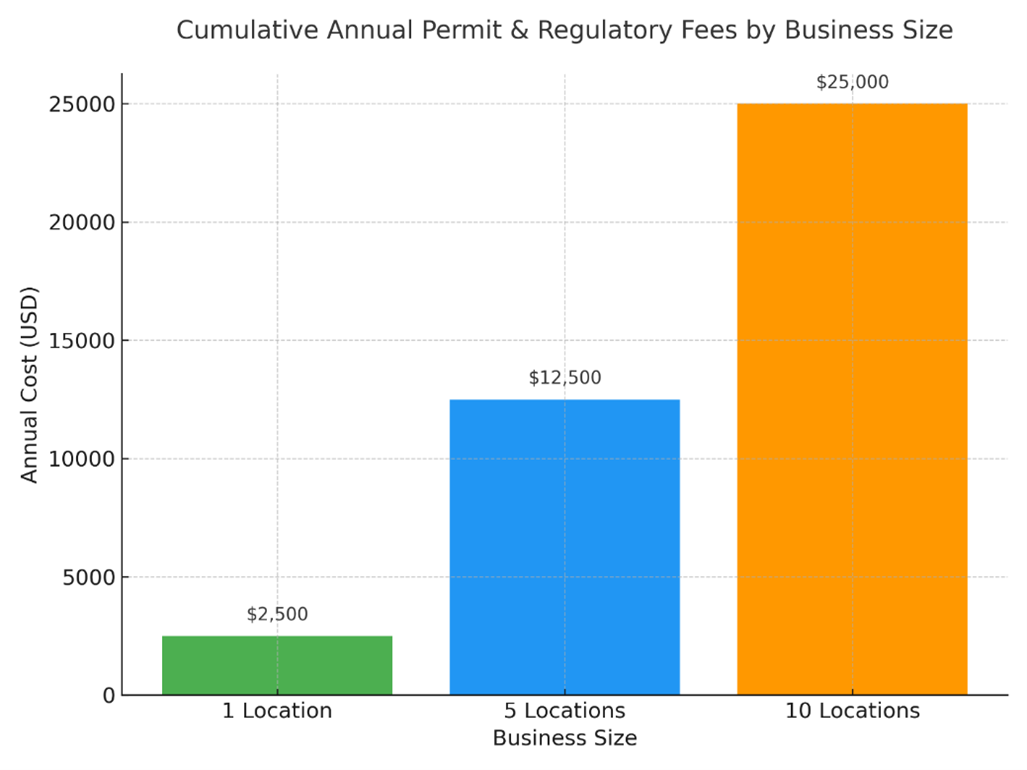
Here is an example chart of how these fees can look annually per location:
How Businesses Can Reduce Risk
The good news is that businesses can take action to reduce overpayment and regain control over permit and regulatory fees. Key strategies include:
- Request line-item transparency: Ask vendors to provide detailed explanations of each fee.
- Audit invoices regularly: Compare charges against local government fee schedules and contract terms.
- Benchmark against industry standards: Understand what similar businesses in your region pay.
- Negotiate contracts proactively: Include caps or fixed pass-through limits for permit and regulatory fees.
- Leverage expert partners: Third-party waste management specialists like National Waste Associates can monitor fees, uncover hidden charges, and ensure compliance with all regulations without overpaying.
How NWA Can Help
National Waste Associates (NWA) provides comprehensive audit and management services designed to protect businesses from hidden permit and regulatory fees. By reviewing contracts and invoices, NWA identifies line items that may be inflated or unclear. We also track regional and industry-specific fee trends, ensuring that your waste spend aligns with actual costs rather than vendor markups.
With NWA’s expertise, companies gain:
- Complete transparency on every fee charged.
- Clear benchmarks against industry and regional norms.
- Proactive monitoring of contract renewals to prevent surprise increases.
- Strategic recommendations to reduce overall waste costs while staying fully compliant with regulations.
This approach not only uncovers hidden expenses but also ensures businesses pay only for what is fair and necessary, freeing up budget for other priorities.
Conclusion
Permit and regulatory fees are a legitimate part of waste management, but they can become a hidden source of unnecessary spending when vendors obscure or mark them up. Businesses that ignore these fees risk losing significant money annually, particularly if they operate across multiple locations or regions with varying regulations.
By demanding transparency, auditing invoices, benchmarking costs, and leveraging expert partners like National Waste Associates, companies can ensure they only pay what is fair and justified. Understanding the true cost of permit and regulatory fees is not just about reducing waste spend – it’s about protecting your bottom line and gaining control over every dollar of your waste management budget.
Hidden fees are easier to overlook than they are to recover. A closer review of your waste invoices may reveal opportunities to improve transparency and reduce unnecessary costs across your locations.
Learn more about our waste & recycling services by
calling 888-692-5005 x6 or sending us an
email at sales@nationalwaste.com
These are charges related to environmental compliance, landfill permits, recycling mandates, and other government-imposed operational requirements that vendors pass through to customers.
Many vendors group them under vague invoice descriptions like “environmental surcharge” or “regulatory recovery fee,” making it difficult to identify what is actually being charged.
In some cases, yes. Certain vendors apply markups or bundle fees in ways that increase overall costs beyond the actual pass-through amount.
Absolutely. State regulations, landfill capacity, environmental mandates, and local permitting requirements can all impact fee structures.
Regular invoice audits, contract reviews, benchmarking, and requesting detailed fee transparency can help uncover inflated or unnecessary charges.
Different vendors and regional regulations often create inconsistent pricing structures across locations, making it harder to identify discrepancies without centralized oversight.
National Waste Associates helps businesses identify hidden charges, benchmark fees against regional standards, audit invoices, and improve overall visibility into waste-related spending.
 BIC License #1496