
Waste Diversion as a Cost Strategy: When Recycling Actually Saves You Money
Table of Contents
Quick Hits: What You Need to Know
- Waste diversion can reduce costs – but only when programs are aligned with operations
- Landfill disposal is often the most expensive option when factoring in fees and inefficiencies
- Contamination is one of the biggest cost drivers in recycling programs
- Not all recycling programs save money – execution and location-specific factors matter
- Organics and diversion programs can reduce hauling frequency and overall service costs
- The most effective strategies balance sustainability goals with financial performance
For many businesses, recycling and sustainability initiatives are often viewed as cost centers – necessary for compliance or brand perception, but not necessarily tied to financial performance.
But that assumption doesn’t always hold up.
When implemented strategically, waste diversion can become a meaningful cost control tool. By reducing landfill reliance, improving operational efficiency, and minimizing avoidable fees, businesses can turn sustainability efforts into measurable savings.
The key is understanding when – and how – diversion actually works.
The True Cost of Landfill vs. Diversion
Landfill disposal is often treated as the default option. It’s simple, widely available, and easy to manage. But it’s not always the most cost-effective path.
Beyond basic hauling fees, landfill waste often comes with additional costs – fuel surcharges, environmental fees, and tipping costs that continue to rise in many markets. Over time, these expenses can make landfill-heavy programs more expensive than they appear on paper.
Diversion strategies – such as recycling, cardboard programs, or organics separation – can offset some of these costs by reducing the total volume of landfill-bound waste.
However, the financial benefit depends on execution. Simply adding recycling services without reducing landfill volume or optimizing service levels may increase costs instead of lowering them.
When Recycling Programs Reduce Spend
Recycling doesn’t automatically lead to savings – but in the right conditions, it can.
The most successful programs are designed around the specific waste streams a business generates. For example, operations with high volumes of recyclable materials – such as cardboard, paper, or certain plastics – are often well-positioned to reduce landfill dependency.
Cost savings typically come from a combination of factors:
- Lower landfill volume, resulting in reduced hauling frequency
- Potential rebates or reduced costs for high-value recyclable materials
- Improved operational efficiency through better waste separation
When these elements are aligned, recycling becomes more than a sustainability initiative – it becomes a cost strategy.
The Hidden Costs of Contamination
One of the most overlooked aspects of waste diversion is contamination.
When non-recyclable materials are placed in recycling containers, it can lead to rejected loads, additional processing fees, or even penalties from haulers. In some cases, entire loads are redirected to landfill – eliminating the intended cost and environmental benefits.
Contamination often stems from unclear processes, lack of employee training, or inconsistent signage across locations.
The impact can include:
- Increased fees due to rejected or contaminated loads
- Higher operational costs from re-sorting or corrective actions
- Reduced effectiveness of diversion programs overall
Addressing contamination isn’t just about improving sustainability – it’s essential for maintaining the financial viability of recycling programs.
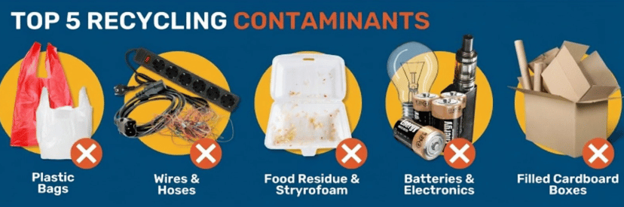
Image from: lawrenceks.gov
Organics Diversion and Hauling Savings
For businesses that generate food waste or organic material, diversion can unlock another layer of cost savings.
Organic waste is often dense and heavy, which can increase landfill costs – especially in high-volume operations like grocery stores, food service, or hospitality. By separating and diverting this material, businesses can reduce both the weight and volume of landfill-bound waste.
This can lead to:
- Fewer landfill pickups
- Lower overall hauling costs
- Reduced strain on existing waste infrastructure
In some regions, organics diversion is also tied to regulatory requirements, making early adoption both a cost and compliance advantage.
Aligning Sustainability with Cost Goals
One of the biggest misconceptions about waste diversion is that it requires choosing between sustainability and cost control.
In reality, the most effective programs are designed to achieve both.
This requires a shift in mindset – from implementing broad, one-size-fits-all recycling programs to developing targeted strategies based on actual waste generation, local market conditions, and operational realities.
Not every location will benefit from the same approach. In some cases, recycling costs may exceed landfill costs depending on regional pricing or infrastructure. In others, diversion can significantly reduce spend.
The goal isn’t to maximize diversion at all costs – it’s to optimize it.
Building a Practical Diversion Strategy
For multi-location businesses, successful waste diversion requires consistency without rigidity.
A h2 approach typically includes:
- Evaluating waste streams at the location level
- Identifying high-impact opportunities for diversion
- Standardizing processes where possible while allowing for local variation
This ensures that diversion efforts are both scalable and effective.
Just as importantly, ongoing monitoring is essential. Waste streams change, markets fluctuate, and operational needs evolve. Programs that aren’t actively managed can quickly lose their effectiveness – or become more costly over time.
Diversion Works – When It’s Done Right
Waste diversion has the potential to reduce costs – but it’s not automatic.
When programs are aligned with actual waste streams, supported by clear processes, and continuously optimized, they can significantly reduce landfill dependency and overall waste spend.
But without that alignment, diversion efforts can introduce new costs and complexities. The challenge for many organizations is not just implementing diversion programs – it’s ensuring they remain efficient and cost-effective across multiple locations.
That’s where a more structured approach becomes valuable. By analyzing waste data, monitoring contamination, and adjusting service levels over time, businesses can turn diversion into a reliable cost strategy.
Partners like
National Waste Associates
help support this process by providing the visibility and ongoing management needed to identify where diversion makes financial sense – and where it doesn’t.
The result is a more balanced approach: one that supports sustainability goals while delivering measurable cost savings.
Not all recycling programs deliver savings – but the right ones can. A quick review of your waste streams can reveal where diversion is helping – and where it may be costing your business more than expected.
Learn more about how NWA can help your organization
improve its waste diversion outcomes by
calling 888-692-5005 x6 or sending us an
email at sales@nationalwaste.com
Frequently Asked Questions (FAQ)
Waste diversion refers to redirecting waste away from landfills through recycling, composting, or other recovery methods.
No. Recycling can reduce costs in the right conditions, but poorly implemented programs or high contamination levels can increase expenses.
Contamination, inefficient service levels, and lack of alignment with actual waste streams are the most common cost drivers.
Clear signage, employee training, and standardized processes across locations are key to reducing contamination and maintaining program efficiency.
Industries with high volumes of recyclable or organic material – such as retail, grocery, hospitality, and manufacturing – often see the greatest benefits.
In many cases, yes – especially for businesses generating large amounts of food waste. It can reduce landfill costs and improve overall efficiency.
By analyzing waste composition, service costs, and local market conditions. Many organizations work with partners like National Waste Associates to evaluate and optimize diversion strategies.
 BIC License #1496