Managing Manufacturing Shutdowns and Changeovers
Table of Contents
Quick Hits: What You Need to Know
- Manufacturing shutdowns and changeovers can create temporary waste volumes far above normal production levels.
- Old equipment, scrap, packaging, damaged inventory, and maintenance debris may all require different disposal or recycling solutions.
- Planning waste services before a shutdown begins gives manufacturers more control over timing and costs.
- Temporary dumpsters, roll-offs, and additional pickups can help handle short-term increases in material volume.
- Separating equipment, recyclable materials, scrap, and general waste can improve recovery and reduce disposal costs.
- Coordinating waste removal with the project schedule can help prevent waste from becoming a production or reopening delay.
Manufacturing facilities are designed to keep materials moving. But when production stops for maintenance, equipment upgrades, line changeovers, expansions, or scheduled shutdowns, that steady flow can quickly turn into a waste-management challenge.
A shutdown or changeover can generate weeks’ or even months’ worth of accumulated materials in a matter of days. Old equipment, damaged inventory, obsolete packaging, maintenance debris, production scrap, and other materials may all need to leave the facility on a tight timeline. Without a waste plan in place before the project begins, manufacturers can find themselves dealing with overflowing containers, missed pickups, unexpected charges, and unnecessary disruptions when they should be focused on getting production back online.
Why Production Shutdowns Create Waste Surges
A normal manufacturing operation may generate a relatively predictable amount of waste each week. Shutdowns are different.
When production stops, employees and contractors may use the downtime to clean production areas, remove outdated materials, replace equipment, perform maintenance, reorganize storage, or prepare lines for a new product. Activities that would normally happen gradually can suddenly occur simultaneously.
A plant that typically fills a few dumpsters each week could therefore generate several times its normal volume during a shutdown.
There is also often a deadline attached to the cleanup. The facility may have only a few days, or a specific maintenance window, to remove materials before production resumes. That makes timing just as important as capacity.
The key takeaway is that manufacturers shouldn’t treat a shutdown as simply “more of the same” waste service. It is a temporary project with different volume, timing, equipment, and vendor-management requirements.
The Waste Generated During Line Changeovers
Line changeovers can be particularly challenging because the materials being removed may vary significantly.
A production line being converted to manufacture a different product may leave behind obsolete packaging, unused raw materials, tooling, pallets, protective materials, and production components. Equipment upgrades can create an entirely different stream that includes machinery, metal components, electrical equipment, and other materials requiring specialized handling.
Maintenance projects can add another layer. Contractors may generate insulation, piping, construction debris, used components, packaging, and other materials while servicing or replacing equipment.
Not everything should necessarily go into the same container.
Materials with potential resale, reuse, or recycling value should ideally be identified before they are mixed with general waste. Valuable metals, cardboard, plastics, pallets, electronics, and certain equipment may have recovery opportunities that disappear once everything is commingled.
This is one reason manufacturing waste management during shutdowns requires more planning than simply ordering a larger dumpster.
Planning Disposal Before the Shutdown Begins
The best time to plan waste removal is before the first piece of equipment is disconnected – not after materials begin accumulating.
Start by reviewing the project scope and creating an estimate of the types and quantities of materials expected. This doesn’t have to be perfect. Even a rough forecast can help determine the appropriate containers, pickup frequency, vendors, and recycling options.
It can also be useful to establish who is responsible for waste decisions during the project. Shutdowns often involve plant managers, maintenance teams, contractors, procurement, facilities staff, and environmental personnel. If no one owns the waste plan, decisions can become reactive.
A pre-shutdown waste plan should consider:
- What materials will be generated and approximately how much?
- Which materials can be reused, recycled, recovered, or sold?
- What container types and sizes will be needed?
- When should containers be delivered and removed?
- Will additional pickups be required?
- Are any materials subject to special handling or disposal requirements?
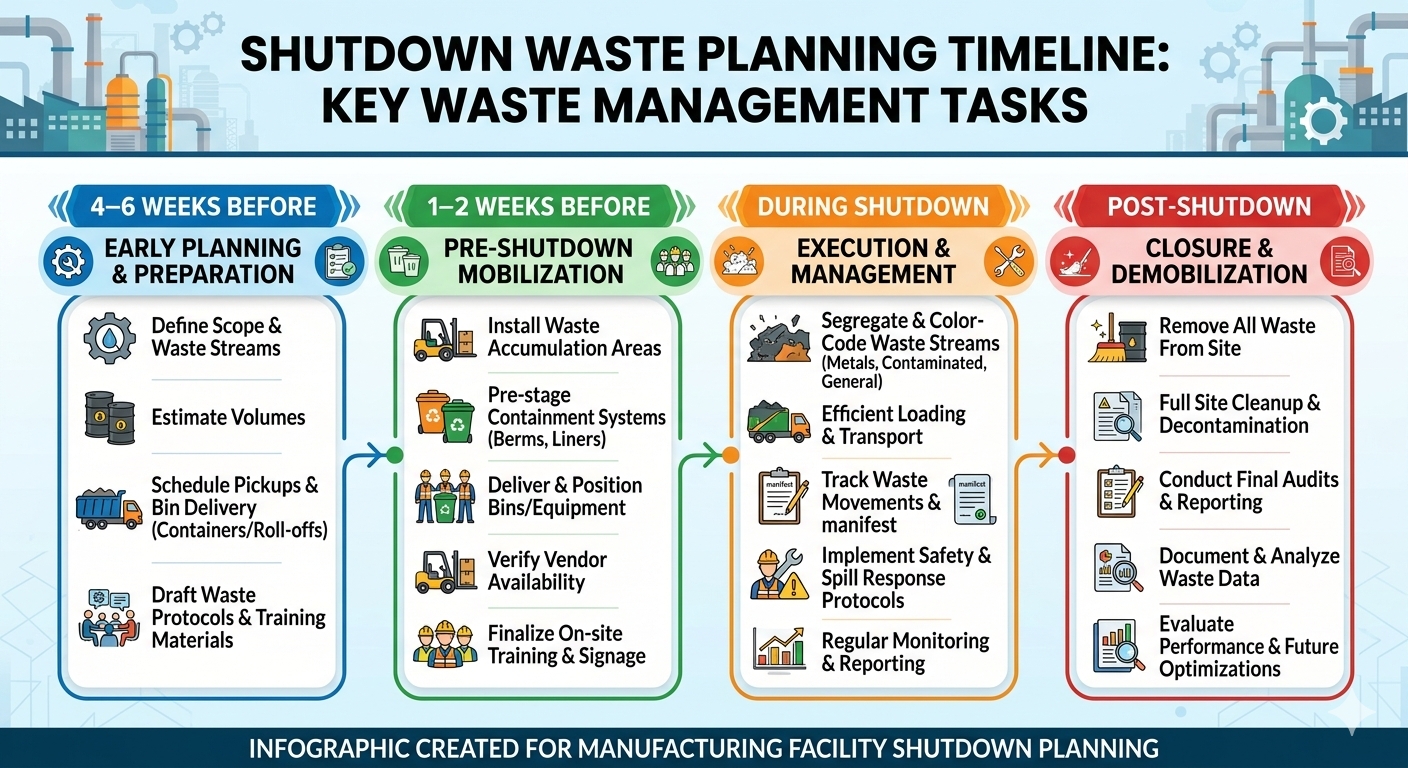
The exact timeline will depend on the size of the facility and project, but the principle is simple: waste logistics should be part of shutdown planning, not just an afterthought.
Temporary Containers and Increased Pickup Frequency
Manufacturers don’t necessarily need to permanently increase their waste capacity just because a shutdown is approaching.
Temporary equipment can provide additional capacity specifically for the duration of the project. Roll-off containers, dumpsters, compactors, and other equipment can be added based on the expected materials and volume.
Pickup frequency can also be adjusted. A facility may normally have a weekly pickup schedule, but during a shutdown, waiting a full week could quickly create a space problem. More frequent service can keep work areas clear and prevent employees or contractors from having to work around accumulating debris.
The reverse is also important. Once the shutdown ends, temporary equipment and additional service should be removed or reduced so the company isn’t paying for capacity it no longer needs.
This flexibility allows manufacturers to match waste services to the actual demands of the project rather than permanently paying for peak capacity.
Separating Equipment, Scrap, and General Waste
One of the biggest opportunities during a shutdown is identifying materials that don’t belong in the general waste stream.
Old machinery may contain valuable metals or components. Cardboard and certain plastics may be recyclable. Pallets may be reused or repaired. Production scrap may have a recovery market. Equipment and materials that are still functional may have opportunities for internal reuse, resale, or donation.
Keeping these materials separated can make those opportunities easier to capture.
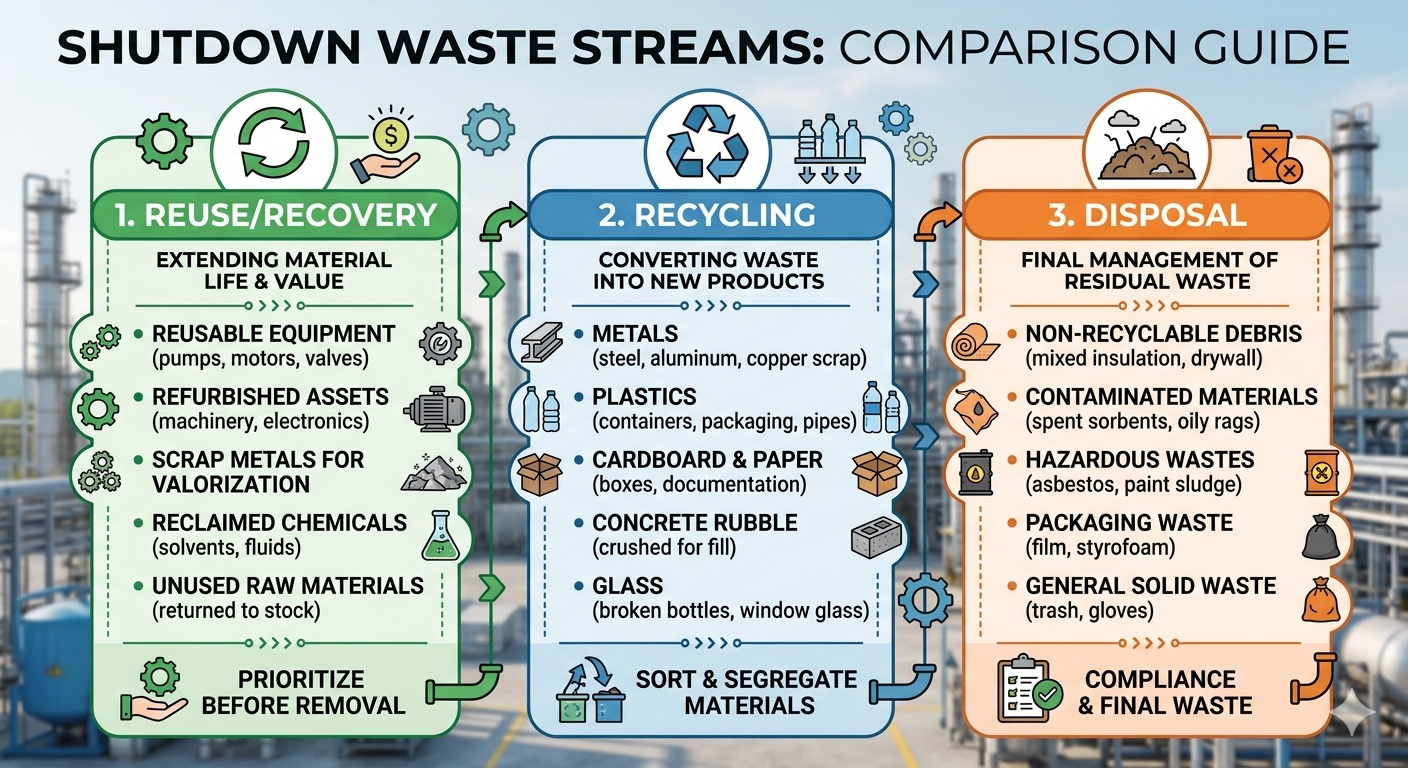
For example, sending a large quantity of metal scrap into a general waste container may mean paying disposal costs for material that could otherwise have recovery value. Similarly, mixing recyclable cardboard with contaminated materials can make recovery more difficult.
A shutdown can therefore be a good opportunity to conduct a temporary waste audit. Instead of simply measuring how much material leaves the facility, manufacturers can examine what is being discarded and whether each material is going to the most appropriate destination.
Avoiding Emergency Hauling and Production Delays
When waste planning starts too late, manufacturers can end up paying for emergency solutions.
A container may fill faster than expected. A scheduled pickup may no longer be sufficient. A contractor may need additional equipment immediately. Or a facility may discover that a particular material requires a different disposal or recycling solution.
These situations can create more than an unexpected waste bill. If containers are full, work may have to stop while teams wait for service. If equipment or debris cannot be removed on schedule, it can interfere with maintenance activities or delay the reopening of a production area.
The cost of a shutdown is already significant. Labor, contractors, equipment, lost production time, and project coordination all add up. Waste logistics shouldn’t become an additional source of downtime.
Planning in advance provides manufacturers with more options. Vendors can be selected, pricing can be reviewed, equipment can be scheduled, and recycling or recovery outlets can be identified before the project begins.
It also gives manufacturers an opportunity to negotiate project-specific pricing rather than accepting whatever emergency service happens to be available.
Making Waste Part of the Shutdown Plan
Manufacturing shutdowns and line changeovers are complex projects with plenty of moving parts. Waste removal may not be the most prominent item on the project schedule, but it can quickly become a problem when it isn’t planned properly.
The most effective approach is to treat waste as another project-management consideration. Forecast what materials are needed, determine what can be recovered, schedule temporary equipment, coordinate pickups, and establish responsibilities before work begins.
When waste services are aligned with the shutdown schedule, manufacturers can keep work areas clear, capture more valuable materials, avoid unnecessary disposal costs, and reduce the risk of waste-related delays.
National Waste Associates can help manufacturers coordinate temporary waste services, manage haulers, arrange equipment and pickups, identify recycling and diversion opportunities, and oversee waste programs across multiple facilities.
Planning a manufacturing shutdown? Reviewing your waste requirements before the project begins can help you avoid last-minute hauling problems and make sure valuable materials don’t end up being treated as ordinary waste.
Learn more about our waste & recycling services by
calling 888-692-5005 x6 or sending us an
email at sales@nationalwaste.com
Frequently Asked Questions (FAQ)
Shutdowns often combine several activities that normally occur separately, including equipment replacement, maintenance, facility cleaning, inventory removal, and production-line changes. These activities can create a temporary surge in scrap, packaging, equipment, debris, and other materials.
Common materials include production scrap, obsolete packaging, pallets, damaged inventory, old machinery, metal components, maintenance debris, cardboard, plastics, and other materials associated with equipment upgrades or line modifications.
Temporary dumpsters, roll-offs, and other equipment can be useful when waste volumes are expected to increase significantly for a limited period. The appropriate equipment depends on the materials, volume, available space, and project timeline.
Manufacturers can reduce the risk of emergency hauling by forecasting waste volumes, scheduling temporary containers and pickups in advance, identifying recycling and recovery options, and coordinating waste services with the overall shutdown schedule.
Yes. Depending on the material and its condition, equipment, metals, cardboard, plastics, pallets, production scrap, and other materials may have opportunities for reuse, recycling, recovery, resale, or other beneficial uses.
National Waste Associates can coordinate temporary waste equipment and pickups, manage hauler relationships, identify recycling and diversion opportunities, help optimize waste services, and provide centralized oversight for shutdown projects across multiple manufacturing locations.
 BIC License #1496
