Managing Pickup Reliability in Healthcare Environments

Table of Contents
Quick Hits: What You Need to Know
- Healthcare facilities generate waste 24/7, making reliable collection services critical to daily operations
- Missed pickups can quickly create sanitation concerns, safety risks, and regulatory compliance issues
- Overflowing compactors and waste storage areas can disrupt staff workflows and patient-care environments
- Emergency pickup planning helps healthcare facilities avoid operational interruptions during service disruptions
- Multi-location healthcare systems benefit from standardized waste management programs and centralized oversight
- Reliable waste service is not just a facility issue – it is a patient experience and risk management issue
Hospitals, medical centers, outpatient clinics, surgical centers, and long-term care facilities operate around the clock, generating waste continuously throughout the day and night. Unlike many industries that can tolerate temporary service interruptions, healthcare organizations depend on consistent waste removal to maintain safe, sanitary, and compliant environments.
When waste collection services perform as expected, they often go unnoticed. However, a single missed pickup, delayed haul-off, or overflowing compactor can quickly create operational challenges that affect staff, patients, visitors, and regulatory compliance.
As healthcare networks continue expanding across multiple locations, maintaining reliable waste collection has become increasingly important. The challenge is no longer simply removing waste – it is ensuring that waste management remains predictable, responsive, and aligned with the unique demands of healthcare operations.
Why Waste Downtime is a Bigger Problem in Healthcare
Every organization generates waste, but healthcare facilities face a unique set of circumstances. Patient care activities occur continuously, generating municipal solid waste, recycling, regulated medical waste, pharmaceutical waste, and other specialized waste streams. Because these materials accumulate throughout the day, collection delays can quickly become operational problems.
Unlike office buildings or retail locations that may have flexibility in managing temporary overflow situations, healthcare facilities often have limited storage capacity and strict sanitation requirements.
A missed pickup can affect:
- Waste storage capacity
- Environmental services operations
- Regulatory compliance efforts
In some cases, what begins as a simple service delay can escalate into a broader operational issue that requires immediate attention from facility management teams.
The Risks of Overflow in Patient-Care Environments
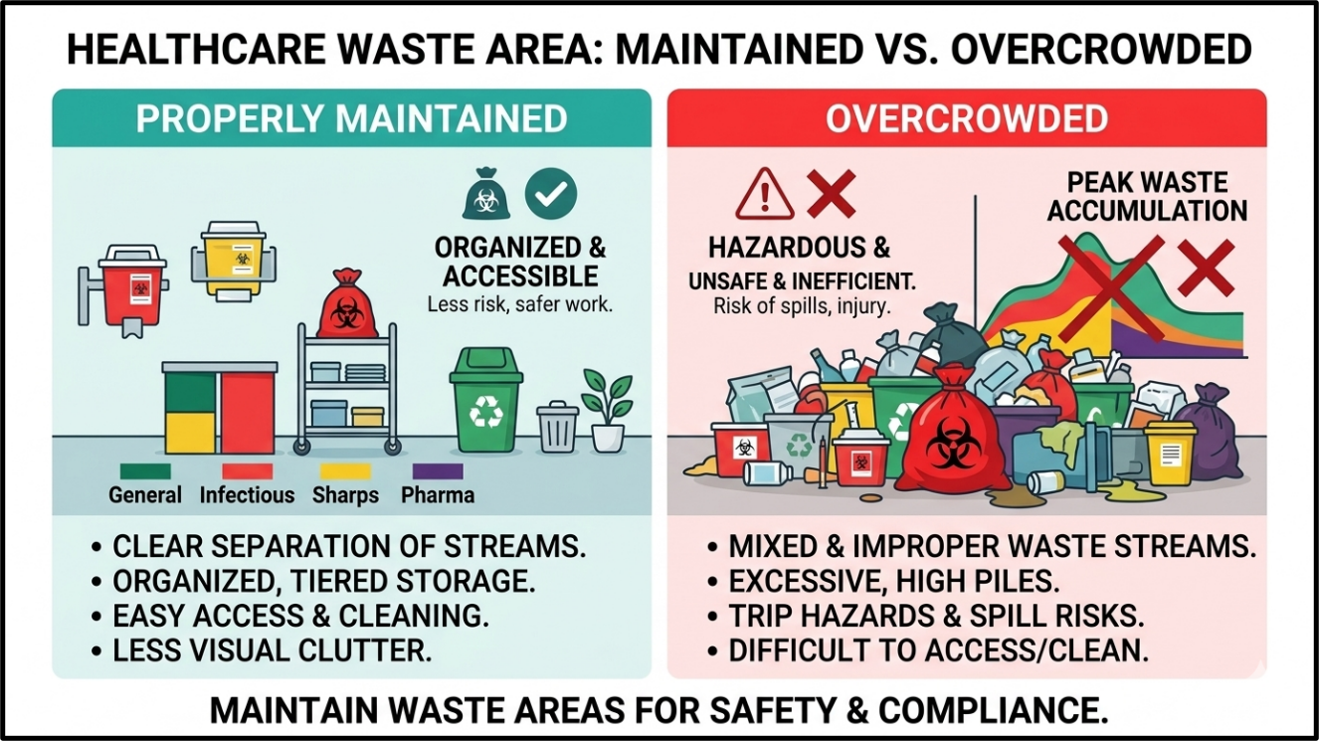
Overflowing waste areas are more than an inconvenience in healthcare settings. Waste accumulation can create sanitation concerns, negatively impact staff efficiency, and increase the likelihood of compliance issues. While most patients never see loading docks or waste enclosures, problems originating in back-of-house operations often have a way of affecting front-line environments.
For example, when compactors reach capacity or waste storage rooms become overcrowded, environmental services teams may need to divert resources from other responsibilities. Delays in waste removal can also place additional strain on departments already operating under demanding conditions.
Potential consequences include:
- Reduced storage capacity for incoming waste
- Increased housekeeping and labor demands
- Greater risk of odor, cleanliness, or pest-related concerns
In healthcare, maintaining a clean and organized environment is closely tied to both patient confidence and operational effectiveness.
Coordinating Waste Services Across Shifts and Departments
One of the most overlooked challenges in healthcare waste management is coordination. Unlike businesses that primarily operate during traditional working hours, healthcare facilities function across multiple shifts, departments, and service areas simultaneously. Waste generation patterns can vary significantly between emergency departments, surgical centers, laboratories, cafeterias, and administrative offices. This complexity makes scheduling especially important.
Collection programs must account for changing waste volumes, department-specific needs, and peak activity periods. What works for one facility – or even one department – may not work elsewhere.
Successful healthcare organizations typically focus on:
- Aligning collection schedules with operational activity
- Maintaining clear communication between vendors and facility teams
- Monitoring service levels regularly to identify potential issues before they escalate
When coordination improves, waste management becomes more predictable and less disruptive to patient-care operations.
Emergency Pickup Planning and Contingency Strategies
Even the most reliable vendors occasionally encounter disruptions. Weather events, vehicle breakdowns, staffing shortages, traffic delays, and regional emergencies can all affect collection schedules. For healthcare facilities, the question is not whether disruptions may occur, but whether contingency plans are in place when they do.
Facilities that rely solely on standard collection schedules often find themselves scrambling when service interruptions happen unexpectedly.
A proactive contingency plan may include:
- Emergency pickup escalation procedures
- Backup hauling resources
- Overflow capacity planning
Having documented response procedures helps facilities react quickly and minimize operational disruptions when service issues arise.
Just as hospitals maintain contingency plans for power outages and emergency events, waste management should be included within broader facility resilience planning.
Standardizing Service Across Healthcare Networks
As healthcare systems continue consolidating and expanding, many organizations now manage dozens – or even hundreds – of facilities across multiple regions. While this growth creates opportunities for operational efficiency, it can also introduce inconsistency in waste management services.
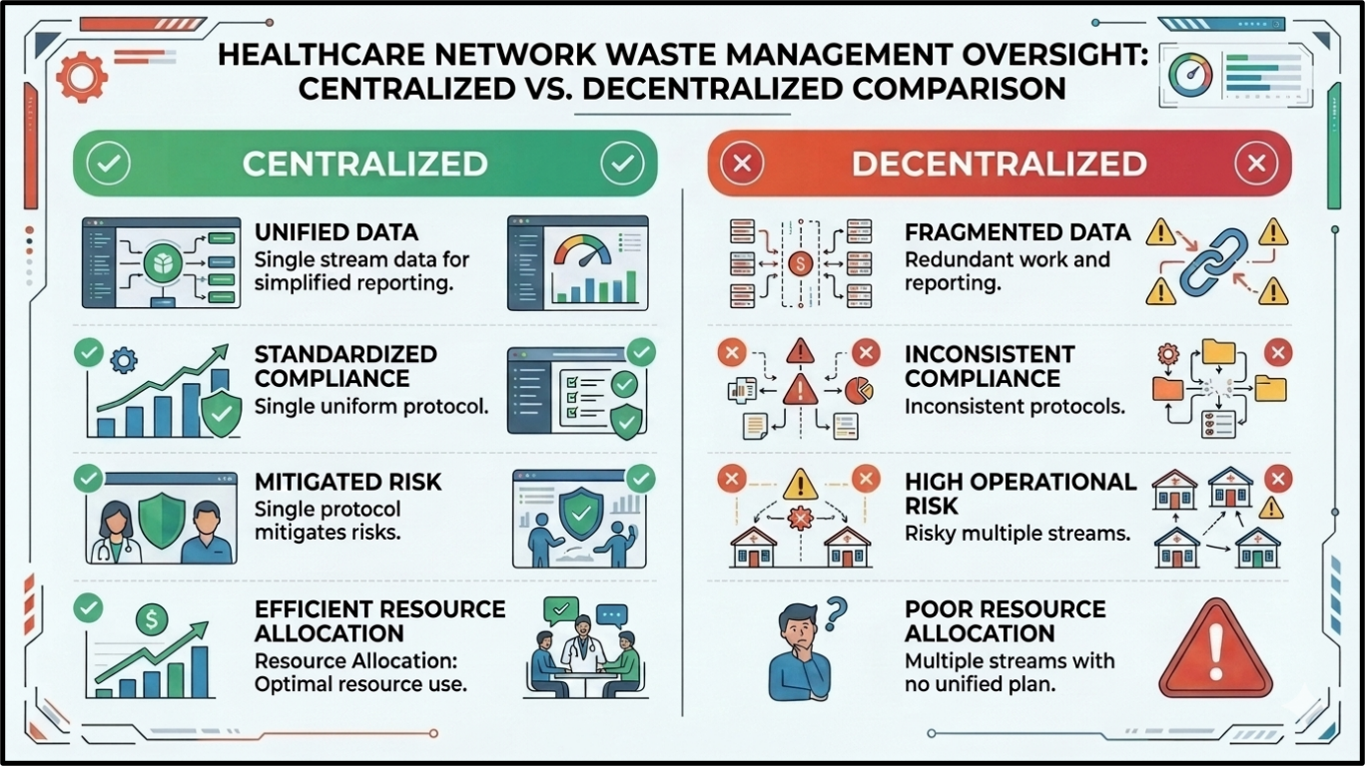
Different facilities may work with different vendors, operate under different contracts, and receive varying levels of service quality. Over time, this fragmentation can create challenges related to reporting, compliance, budgeting, and vendor accountability.
Centralized waste programs help healthcare organizations establish greater consistency by creating standardized service expectations, reporting processes, and performance metrics across locations. Benefits often include:
- Improved service visibility across facilities
- More consistent vendor performance
- Better cost management and reporting
For healthcare leadership teams, centralized oversight provides a clearer understanding of operational performance while reducing administrative complexity.
The Role of Reliable Waste Management in Patient Experience
While waste operations typically occur behind the scenes, they still influence the overall patient experience. Clean facilities, organized service areas, and efficient operations contribute to a positive perception of quality and professionalism. Conversely, visible waste issues can undermine confidence and create unnecessary distractions for staff and visitors alike.
Reliable waste collection supports more than compliance and cleanliness – it helps maintain the environment healthcare organizations work hard to provide.
As patient expectations continue evolving, facility operations increasingly play a role in supporting broader quality and satisfaction initiatives.
How National Waste Associates Helps Healthcare Organizations Improve Service Reliability
For healthcare organizations, waste management is not simply a hauling function – it is an operational necessity.
National Waste Associates helps hospitals, healthcare systems, outpatient facilities, and medical networks improve waste service reliability through centralized coordination, vendor management, reporting oversight, and proactive service monitoring.
By helping organizations standardize programs across multiple locations, identify service gaps, and improve communication between facilities and vendors, NWA supports both operational efficiency and regulatory compliance objectives.
The result is greater visibility, improved responsiveness, and a more dependable waste management program that supports patient-care environments rather than competing with them.
The Bottom Line: Reliable Waste Service Supports Better Healthcare Operations
Healthcare facilities cannot afford waste management disruptions. Missed pickups, overflowing containers, and inconsistent service levels can quickly create operational challenges that affect staff productivity, sanitation efforts, and patient experience.
As healthcare systems continue growing and managing increasingly complex facility networks, reliable waste collection has become a critical component of operational performance.
By focusing on service coordination, contingency planning, standardized oversight, and proactive vendor management, healthcare organizations can reduce risk and ensure waste management remains a dependable part of daily operations.
Because in healthcare, reliability matters – and that includes the systems working behind the scenes.
Reliable waste collection is easy to overlook – until a service disruption occurs. Healthcare organizations that proactively manage waste operations often find opportunities to improve service consistency, reduce risk, and strengthen overall facility performance.
Learn more about how NWA can help your healthcare
organization optimize its waste operations by
calling 888-692-5005 x6 or sending us an
email at sales@nationalwaste.com
FAQ
Healthcare facilities operate continuously and generate waste around the clock. Reliable pickups help maintain sanitation, regulatory compliance, and efficient facility operations.
Missed pickups can lead to overflowing storage areas, operational disruptions, increased labor demands, and potential sanitation concerns if not addressed quickly.
Facilities should establish contingency plans that include emergency pickup procedures, backup service resources, overflow capacity planning, and clear escalation protocols.
Healthcare facilities commonly manage municipal solid waste, recycling, regulated medical waste, pharmaceutical waste, sharps, and other specialized waste streams that may require different handling procedures.
Centralized programs improve visibility, standardize service expectations, simplify reporting, and help maintain consistent service quality across multiple locations.
Yes. Clean, organized facilities contribute to positive patient perceptions, while visible waste-related issues can negatively affect overall impressions of quality and professionalism.
National Waste Associates helps healthcare facilities improve waste service reliability through vendor management, centralized reporting, operational oversight, and program standardization across multi-location healthcare networks.
 BIC License #1496