Managing Trash Overflow at High-Traffic Fuel Locations
Gas stations operate at the intersection of mobility and convenience. On any given day, a single location may serve commuters grabbing coffee, families heading out on road trips, truck drivers logging long miles, and travelers making quick stops along major highways. This constant flow of customers creates steady demand – but it also produces steady waste.
During peak travel periods, that steady stream becomes a surge. Holiday weekends, summer travel months, major regional events, and even severe weather evacuations can send traffic skyrocketing with little warning. While operators prepare for fuel demand and in-store sales spikes, trash capacity is often overlooked until containers begin overflowing.
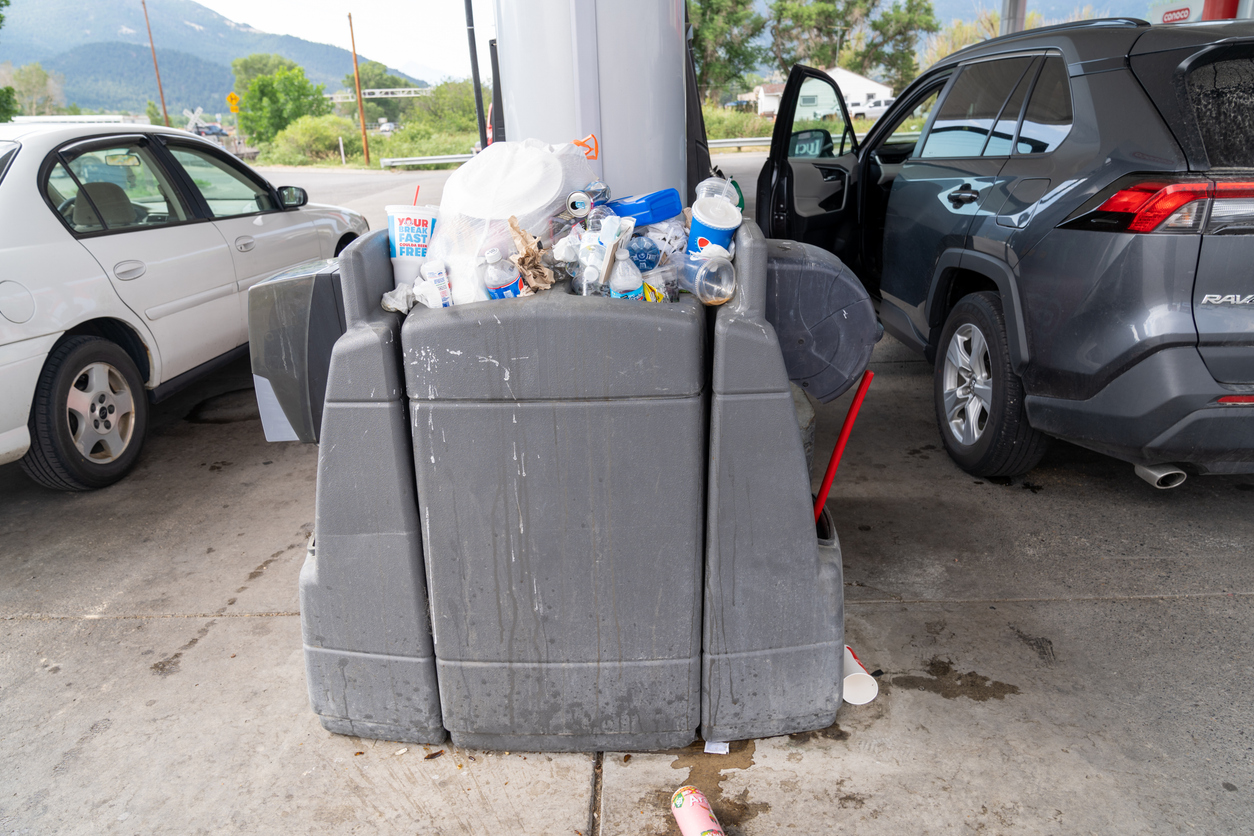
When that happens, the consequences extend far beyond aesthetics. Overflowing trash impacts curb appeal, creates safety concerns, strains staff, and can erode customer trust in a matter of hours. For high-traffic fuel locations, proactive waste planning isn’t just operational housekeeping – it’s a critical component of the customer experience.
Why Gas Stations Face Unpredictable Waste Volume Spikes
Few industries experience traffic variability quite like fuel retail. A station may see predictable patterns during weekday commutes, only to experience dramatic increases during holiday travel or long weekends. Locations near highways, tourist destinations, or major intersections are especially vulnerable to sudden volume jumps.
Unlike restaurants or retail stores that can moderate entry through reservations or store hours, gas stations remain highly accessible. When drivers pull in, waste follows – from beverage cups and food packaging to windshield wipes, paper towels, and general vehicle trash cleared out during stops.
The challenge is that waste infrastructure rarely adjusts at the same speed as traffic. Containers sized for average demand can reach capacity far earlier than expected when travel surges occur.
When Peak Travel Periods Overwhelm Capacity
Overflow rarely happens all at once. It builds gradually throughout the day until a tipping point is reached – often during the busiest hours when staff are already stretched thin.
Common operational pressures include:
- Trash receptacles at the pumps filling faster than employees can service them
- Outdoor containers reaching capacity before scheduled pickup
- Recycling bins overflowing due to increased beverage packaging
- Wind carrying loose litter across the forecourt
- Customers leaving trash near full receptacles rather than searching for alternatives
- Back-of-house dumpsters becoming inaccessible due to overfill
Once waste escapes its designated space, it spreads quickly. What starts as a full container can become a litter problem across the property within hours.
Overflow Directly Impacts Curb Appeal and Customer Trust
Fuel customers make rapid judgments. Unlike destination retail, many drivers choose stations based on visibility and perceived cleanliness as they approach. A tidy forecourt signals professionalism and safety; visible trash suggests neglect.
When containers overflow, the effect is immediate. Customers may question the condition of the restrooms, the quality of food offerings, or the overall safety of the property. Some will simply drive to the next station.
For branded locations, this perception risk extends beyond a single site. Travelers often associate their experience with the brand as a whole, meaning localized waste issues can quietly undermine broader reputation.
Cleanliness is not just cosmetic – it is foundational to customer confidence.
The Hidden Labor Cost of Constant Cleanup
When trash volumes exceed capacity, employees become the safety net. Instead of focusing on customer service, stocking, or transaction speed, staff are pulled outside to manage waste.
This reactive cleanup creates several operational challenges:
- Frequent trash runs divert employees from revenue-generating tasks
- Managers spend time coordinating emergency pickups
- Staff morale declines when cleanup becomes constant
- Labor costs rise without improving the customer experience
- Teams operate in a cycle of response rather than prevention
Over time, this pattern leads to inefficiency. Employees shouldn’t have to function as an extension of the waste program – yet at many high-traffic locations, that’s exactly what happens.
Safety Risks Around Pumps and Entrances
Overflow isn’t just unsightly; it can create legitimate hazards. Loose trash can obstruct walkways, blow into driving lanes, or accumulate near fueling areas. Spilled liquids from discarded cups increase slip risks, particularly during inclement weather.
Additionally, cluttered environments make it harder for customers to navigate the property comfortably, especially at night or during busy travel windows.
As you can see in the pie chart from the National Floor Safety Institute below, walking surfaces account for the majority of slip and fall incidents.
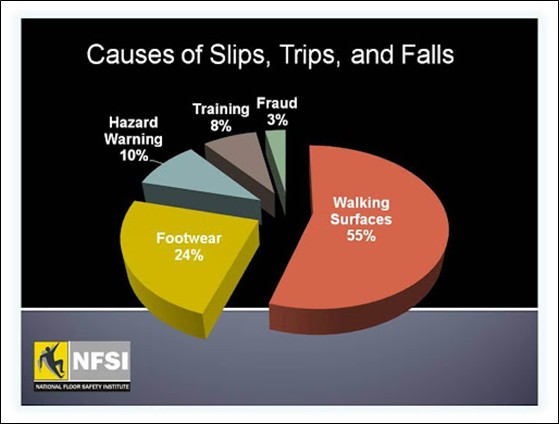
Image from: liquidtraction.com
Maintaining clear, organized waste areas supports safer traffic flow for both vehicles and pedestrians – a priority for any high-volume fuel location.
Adjusting Service Levels for Predictable Surges
While some traffic spikes are unexpected, many are entirely foreseeable. Holiday travel calendars, regional tourism patterns, and historical sales data provide valuable signals for when waste demand will rise.
Operators who plan ahead typically focus on a few critical adjustments:
- Increasing pickup frequency ahead of major travel weekends
- Adding temporary container capacity during peak seasons
- Ensuring pump-side receptacles are serviced more frequently
- Aligning pickup timing with lower-traffic hours
- Confirming hauler availability when demand is highest
- Reviewing container placement to support efficient employee access
These proactive steps help prevent the operational scrambling that occurs when overflow catches teams off guard.
Preventing Overflow Without Disrupting Daily Operations
The strongest waste programs operate almost invisibly. Customers shouldn’t notice them, and employees shouldn’t have to think about them constantly.
Achieving that level of consistency requires aligning waste logistics with how the site actually functions. Pickup windows should minimize interference with fuel traffic. Container locations should support fast employee servicing without creating visual clutter. Capacity should reflect real usage patterns rather than outdated assumptions.
When these elements work together, waste management fades into the background – exactly where it belongs.
Treating Waste Management as Part of the Customer Experience
Fuel retailers invest heavily in lighting, signage, merchandising, and forecourt maintenance because they understand the power of first impressions. Waste management deserves the same strategic attention.
A clean exterior communicates order, safety, and operational discipline. It reassures customers they are stopping at a well-run location. Conversely, visible trash sends the opposite message – often louder than operators realize.
Forward-looking fuel operators increasingly view waste logistics as an extension of brand management rather than a basic utility.
How National Waste Associates Helps Fuel Operators Stay Ahead of Overflow
National Waste Associates helps gas stations and convenience retailers maintain clean, safe properties by proactively managing waste capacity and service levels. Through centralized coordination, flexible scheduling, and ongoing performance oversight, NWA ensures that trash and recycling programs keep pace with real-world traffic patterns.
Instead of reacting to overflow after it occurs, operators gain a structured approach designed to prevent disruptions, reduce labor strain, and protect curb appeal – even during the busiest travel periods.
Because when customers pull onto the forecourt, their first impression shouldn’t be the trash can. It should be confidence in the location they’ve chosen.
Learn more about our waste & recycling services by
calling 888-692-5005 x6 or sending us an
email at sales@nationalwaste.com
 BIC License #1496