
Move-In, Move-Out Waste – Managing Disposal Surges at Self-Storage Facilities

Table of Contents
Quick Hits: What You Need to Know
- Self-storage facilities often experience unpredictable spikes in waste volume during move-ins, move-outs, auctions, and unit cleanouts
- Bulky items like mattresses, furniture, and abandoned belongings can quickly overwhelm standard dumpster capacity
- Overflow and illegal dumping create operational headaches, customer complaints, and additional disposal expenses
- Proactive planning and flexible waste services help facilities respond to seasonal and event-driven waste surges
- Clear tenant communication and signage can significantly reduce contamination and improper disposal
- Effective waste management helps protect both property appearance and the customer experience
Self-storage facilities are designed to provide flexibility for customers – but that same flexibility creates unique waste management challenges for operators.
Unlike traditional commercial properties that generate relatively predictable waste volumes, self-storage facilities can experience sudden spikes in debris generation with little warning. Tenant move-outs, abandoned units, auctions, and seasonal cleanouts can produce large amounts of cardboard, furniture, mattresses, and miscellaneous junk almost overnight.
What may appear to be a manageable waste stream one week can quickly turn into overflowing dumpsters and frustrated employees the next.
For storage operators focused on maintaining clean properties and positive customer experiences, managing these waste surges has become an increasingly important operational priority.
Why Waste Volumes Spike During Tenant Turnover
Tenant turnover is one of the biggest drivers of waste generation at self-storage facilities. Move-ins often generate cardboard boxes, packing materials, and protective wrap which may be left outside the unit. Move-outs can create even larger challenges when tenants leave behind items they no longer want, forcing facility staff to coordinate removal and disposal.
Waste spikes are especially common during:
- Seasonal moving periods
- College move-in and move-out cycles
- Unit cleanouts and tenant transitions
Because these events are often difficult to predict precisely, facilities must be prepared to respond quickly when waste volumes suddenly increase.
Common Disposal Problems at Storage Facilities
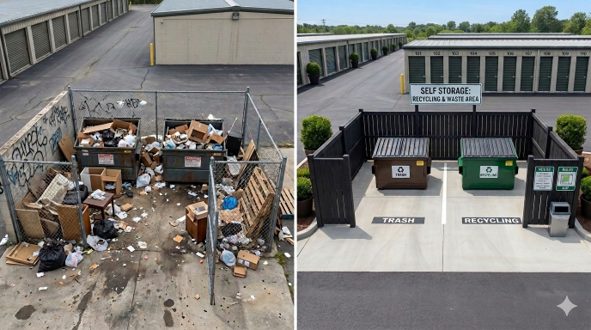
Unlike office buildings or retail locations, self-storage facilities frequently encounter bulky and unconventional waste streams. Items left behind by tenants are often too large or too cumbersome for traditional waste containers. Mattresses, couches, appliances, and broken furniture can consume valuable dumpster capacity while creating unsightly conditions around the property.
In addition to volume challenges, operators often face:
- Overflowing dumpsters
- Illegal dumping by non-customers
- Contamination of recycling containers
These issues not only increase hauling costs but can also negatively impact the appearance and reputation of the facility.
For prospective customers evaluating multiple storage options, property cleanliness often plays a significant role in their decision-making process.
Preventing Overflow During Auctions and Cleanouts
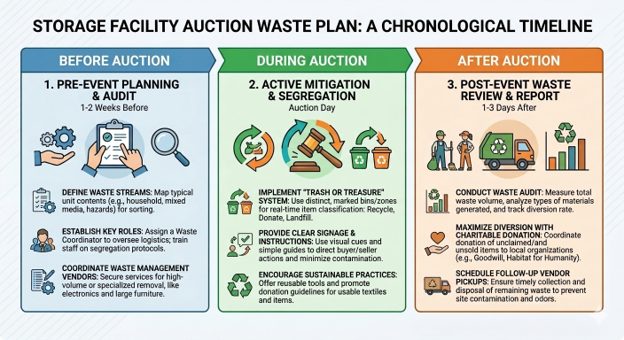
Storage auctions and abandoned unit cleanouts can create some of the largest waste events facilities experience. After auctions conclude, unwanted items are frequently discarded onsite. Similarly, staff handling abandoned units often encounter large volumes of debris that exceed normal service levels.
Without preparation, these events can quickly overwhelm existing containers and create service disruptions. Many operators improve outcomes by:
- Scheduling temporary containers before major cleanouts
- Increasing pickup frequency during anticipated high-volume periods
- Coordinating closely with waste vendors in advance
Planning ahead helps facilities avoid emergency service requests while maintaining a cleaner and safer property.
Strategies for Handling Bulky Waste Items
Bulky waste remains one of the most persistent challenges in the storage industry. Mattresses, furniture, appliances, and oversized debris often require different handling procedures than ordinary trash. Attempting to force these materials into standard containers can create safety concerns and reduce available capacity for everyday waste.
Facilities that experience recurring bulk disposal issues often benefit from establishing clear procedures and designated collection areas. Successful strategies may include:
- Providing separate areas for oversized items
- Using temporary roll-off containers during large cleanouts
- Establishing approved disposal procedures for staff
These measures help improve efficiency while reducing unnecessary service disruptions.
Tenant Communication and Signage Best Practices
One of the simplest ways to reduce waste-related problems is improving communication with tenants. Many improper disposal incidents occur because customers are unsure about what is allowed or where materials should be placed. Clear communication helps set expectations before problems occur.
Effective communication tools include:
- Dumpster signage with prohibited items listed
- Move-in packets explaining disposal policies
- Reminder emails during peak moving periods
Consistent messaging can significantly reduce contamination, overflow, and illegal dumping while helping customers understand their responsibilities.
Good communication also protects staff from spending unnecessary time addressing preventable issues.
Protecting Property Appearance and Customer Experience
Waste management affects more than operational efficiency – it also impacts customer perception. Overflowing dumpsters, scattered debris, and visible illegal dumping can make a facility appear poorly maintained, even when the rest of the property is clean and secure.
Because customers often compare facilities based on appearance, maintaining orderly waste areas supports broader customer retention and marketing efforts.
A clean property reinforces professionalism, improves curb appeal, and helps create the experience customers expect when entrusting their belongings to a storage provider.
How National Waste Associates Helps Storage Operators Manage Waste Surges
Managing unpredictable waste volumes requires flexibility, responsiveness, and ongoing oversight.
National Waste Associates helps self-storage operators optimize waste programs, coordinate temporary services, and improve visibility into hauling costs across individual facilities or multi-location portfolios.
By helping facilities align service levels with actual waste generation patterns, NWA supports cleaner properties, better customer experiences, and more efficient operations.
For operators dealing with seasonal spikes, auctions, and recurring bulky waste challenges, proactive waste management can make a significant difference in both costs and property performance.
The Bottom Line: Preparation is the Key to Managing Storage Waste
Irregular waste generation is one of the defining operational challenges of the self-storage industry. Move-outs, auctions, abandoned units, and seasonal cleanouts can create sudden spikes that overwhelm even well-maintained facilities if proper planning is not in place.
By anticipating volume surges, improving tenant communication, and creating flexible waste strategies, storage operators can reduce disruptions and maintain cleaner, more attractive properties.
Because in self-storage, waste management isn’t just about disposal – it’s about protecting the customer experience and preserving the value of the property itself.
Waste spikes may be unavoidable in the self-storage industry, but overflowing dumpsters and emergency service calls don’t have to be. With the right planning and support, facilities can better manage disposal surges while maintaining cleaner properties and stronger customer experiences.
Learn more about how NWA can help your storage
organization optimize its waste operations by
calling 888-692-5005 x6 or sending us an
email at sales@nationalwaste.com
Frequently Asked Questions (FAQ)
Move-ins, move-outs, abandoned units, auctions, and seasonal cleanouts can all generate sudden increases in waste that are difficult to forecast.
Common items include mattresses, couches, furniture, appliances, cardboard boxes, and miscellaneous abandoned belongings.
Facilities can schedule additional pickups, use temporary containers, and coordinate with waste vendors before anticipated high-volume events.
Illegal dumping creates additional disposal expenses, reduces container capacity, and negatively impacts property appearance and customer satisfaction.
Clear signage and customer education help tenants understand disposal rules, reducing contamination and improper dumping.
Yes. Temporary containers often provide additional capacity needed during auctions, unit cleanouts, and other large waste events.
National Waste Associates helps facilities optimize service schedules, coordinate temporary solutions, improve cost visibility, and manage waste programs across multiple locations.
 BIC License #1496