Reducing Cardboard and Plastic Waste in Automotive Supply Chains

Table of Contents
Quick Hits: What You Need to Know
- Automotive dealerships and repair facilities generate significant volumes of cardboard, shrink wrap, pallets, and plastic packaging
- Poorly managed packaging waste can create backroom congestion, safety risks, and operational inefficiencies
- Cardboard recycling programs can help reduce disposal costs and may generate commodity rebate revenue
- Consolidating and separating recyclable materials improves collection efficiency and reduces contamination
- Better packaging waste management can free up valuable storage space and improve workflow throughout service departments
- Proactive recycling strategies support both sustainability goals and cost control initiatives
For most automotive dealerships and repair facilities, parts are constantly moving. Whether it’s routine maintenance components, warranty replacements, collision repair materials, or inventory replenishment, a steady stream of deliveries arrives every day. Along with those parts comes something many operations underestimate: packaging waste.
Cardboard boxes, shrink wrap, plastic film, pallets, strapping, and protective materials quickly accumulate behind the scenes. While these materials are necessary to protect products during shipping, they create a growing operational challenge once deliveries are unpacked.
Unlike customer-facing concerns such as sales or service performance, packaging waste often receives little attention until it begins causing problems. Overflowing recycling containers, cluttered storage areas, and inefficient disposal practices can consume valuable labor time while creating unnecessary hauling costs.
For automotive operations focused on efficiency, controlling packaging waste isn’t simply a sustainability initiative – it’s a practical way to improve workflow, reduce costs, and create a cleaner, more productive environment.
The Packaging Problem Behind Automotive Repairs
The average dealership or repair facility receives dozens – sometimes hundreds – of parts shipments each week. Every shipment generates some combination of cardboard, plastic wrap, protective foam, wooden pallets, or packing materials. Individually, these items seem manageable. Collectively, they can create a substantial waste stream that grows faster than many facilities expect.
Unlike traditional trash, packaging waste tends to be bulky. Large boxes and plastic film can consume significant floor space long before containers reach their weight limits.
As service departments become busier and parts inventories increase, waste accumulation often accelerates alongside operational growth. The challenge is particularly noticeable in:
- High-volume service centers
- Collision repair facilities
- Multi-location dealership groups
Without a clear process for handling packaging materials, waste can quickly become an obstacle to productivity rather than a routine housekeeping task.
Managing Daily Waves of Cardboard and Plastic
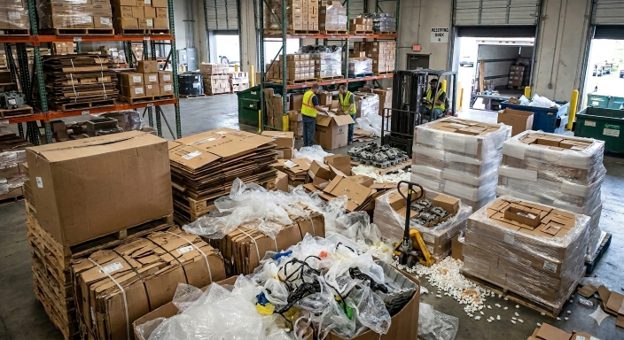
One of the biggest challenges facing automotive facilities is the sheer volume of packaging waste generation. Unlike occasional cleanouts or seasonal waste spikes, parts deliveries occur daily. This creates a constant flow of recyclable materials that must be managed efficiently to prevent accumulation.
Many facilities rely on employees to break down boxes and dispose of materials throughout the day. While simple in theory, inconsistent practices often lead to overflowing recycling containers and wasted labor.
The most successful operations establish clear processes for:
- Breaking down cardboard immediately after unpacking
- Separating plastic film from cardboard streams
- Consolidating materials in designated collection areas
Small process improvements can significantly reduce the amount of time employees spend handling waste while improving overall recycling performance.
Preventing Backroom Congestion
Backroom space is valuable real estate. Every square foot occupied by unused packaging materials is space that cannot be used for inventory storage, technician support, or operational activities.
When cardboard and plastic begin accumulating in receiving areas, service bays, or parts departments, workflow becomes less efficient. Employees spend more time navigating around clutter, and safety risks often increase.
Common signs of packaging waste congestion include:
- Cardboard stacked in aisles or walkways
- Overflowing recycling containers
- Temporary storage piles waiting for pickup
These issues often indicate that recycling collection schedules, container sizing, or internal processes need adjustment. By addressing congestion proactively, facilities can improve organization while reducing the likelihood of operational disruptions.
Improving Recycling Efficiency for Service Departments
Many automotive facilities already recycle cardboard, but participation alone does not guarantee efficiency. Poor material separation, contamination, and inconsistent collection practices can reduce the effectiveness of even well-intentioned recycling programs.
For example, cardboard mixed with food waste, oily materials, or excessive plastic packaging may create processing challenges and reduce recycling value. Similarly, recyclable plastic film often requires separate handling from cardboard to maximize recovery opportunities.
Improving efficiency starts with creating clear procedures and ensuring employees understand them. Facilities that achieve the best results typically focus on:
- Consistent signage and recycling instructions
- Dedicated collection containers for different materials
- Regular monitoring of recycling volumes and contamination trends
These efforts not only improve diversion rates but also help reduce unnecessary disposal costs.
Leveraging Commodity Rebates for OCC Recycling
One of the most overlooked opportunities in automotive waste management involves Old Corrugated Containers (cardboard, commonly referred to as OCC).
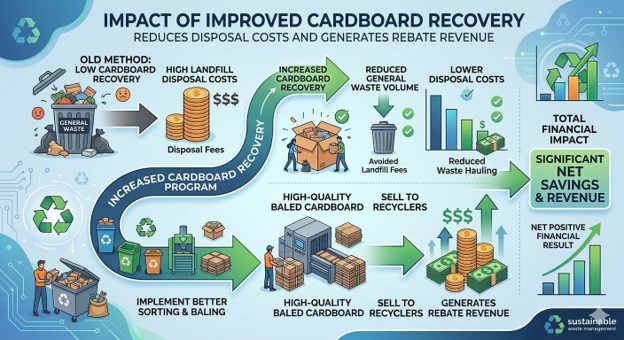
Unlike many waste materials, cardboard often retains commodity value when collected and processed properly. Depending on market conditions, volume, and regional infrastructure, businesses may be eligible for recycling rebates or revenue-sharing programs.
While cardboard prices fluctuate throughout the year, high-volume generators often have opportunities to offset a portion of their waste management costs through effective recycling programs.
However, maximizing value requires consistency. Factors that can impact rebate opportunities include:
- Contamination levels
- Material quality
- Collection volumes
- Market demand
Facilities that treat cardboard as a recoverable commodity rather than simply another waste stream often achieve stronger financial results.
For dealership groups operating multiple locations, these opportunities can become even more significant when recycling volumes are aggregated across the organization.
The Connection Between Sustainability and Operational Efficiency
Many automotive businesses pursue recycling initiatives primarily because of environmental goals. While sustainability remains important, the operational benefits are often just as valuable.
A well-managed recycling program can help reduce hauling frequency, improve space utilization, streamline workflow, and support cleaner facilities. These improvements create measurable benefits for employees while helping organizations meet broader corporate sustainability objectives.
As manufacturers, customers, and stakeholders place increasing emphasis on environmental performance, automotive organizations are also finding that recycling programs contribute positively to brand reputation and ESG initiatives.
The key is ensuring that sustainability efforts are supported by practical operational strategies.
How National Waste Associates Helps Automotive Operations Optimize Recycling
Managing packaging waste effectively requires more than simply adding recycling containers. As waste streams grow and operations become more complex, many automotive businesses benefit from a more strategic approach to waste and recycling management.
National Waste Associates helps dealerships, repair facilities, and multi-location automotive organizations evaluate recycling programs, optimize service levels, and improve visibility into waste-related costs.
By analyzing material volumes, identifying opportunities for better recycling coordination, and helping facilities align collection schedules with operational needs, NWA supports both sustainability and cost-control objectives.
For organizations generating significant volumes of cardboard and packaging materials, these improvements can lead to cleaner facilities, greater efficiency, and better overall waste program performance.
Conclusion: Packaging Waste Deserves More Attention
Cardboard and plastic waste are often viewed as unavoidable byproducts of automotive operations.
But when managed strategically, these materials represent an opportunity – not just a challenge.
Reducing packaging waste congestion, improving recycling efficiency, and maximizing cardboard recovery can help facilities operate more smoothly while controlling waste-related expenses.
For dealerships and repair facilities handling constant parts deliveries, small improvements in packaging management can produce meaningful operational benefits over time.
And as organizations continue balancing efficiency, sustainability, and cost control, packaging waste management is becoming an increasingly important piece of the equation.
Packaging waste may be an unavoidable part of automotive operations, but unnecessary disposal costs and backroom congestion don’t have to be. A closer look at your recycling program could reveal opportunities to improve efficiency, recover value, and reduce waste-related expenses.
Learn more about how NWA can help your automotive
business reduce its cardboard and plastic waste by
calling 888-692-5005 x6 or sending us an
email at sales@nationalwaste.com
Frequently Asked Questions (FAQ)
Automotive dealerships and repair facilities receive frequent parts shipments, most of which arrive in corrugated cardboard boxes designed to protect components during transportation.
Common materials include cardboard, shrink wrap, plastic film, pallets, packing foam, strapping, and other protective shipping materials.
Implementing structured recycling processes, increasing collection frequency, and ensuring employees break down materials promptly can significantly reduce clutter and improve workflow.
OCC stands for Old Corrugated Cardboard, one of the most widely recycled packaging materials and often a valuable commodity in commercial recycling programs.
Depending on market conditions, material quality, and collection volume, some businesses may qualify for recycling rebates or revenue-sharing opportunities for OCC materials.
Keeping materials separated reduces contamination, improves recycling efficiency, and can increase the value of recyclable commodities.
National Waste Associates helps organizations optimize collection schedules, improve recycling processes, identify cost-saving opportunities, and maximize the value of recoverable materials across multiple locations.
 BIC License #1496