The Challenge of Office Cleanouts During Branch Consolidations

Table of Contents
As financial institutions continue to consolidate branches, renovate offices, and adapt to changing workplace needs, they often face an unexpected challenge: managing large volumes of waste generated during these transitions.
Unlike routine office operations, branch consolidations create unique waste streams that can include furniture, electronics, confidential records, fixtures, and other materials that require specialized handling. Without proper planning, these projects can lead to unnecessary disposal costs, compliance risks, and operational disruptions.
A strategic waste management plan can help institutions reduce costs, recover value from reusable materials, and ensure sensitive information and regulated materials are handled properly throughout the process.
Quick Hits: What You Need to Know
- Branch consolidations create waste streams that require far more planning than routine office waste collection.
- Furniture, electronics, confidential documents, and construction debris each require different disposal and recycling strategies.
- Temporary waste solutions often improve project efficiency compared to relying solely on existing dumpster service.
- Proper planning helps reduce disposal costs while increasing recycling, reuse, and asset recovery opportunities.
- Secure handling of documents and electronic devices helps protect sensitive customer information and maintain compliance.
- Coordinated waste management keeps consolidation projects on schedule while minimizing operational disruptions.
Why Consolidations Create Unique Waste Challenges
Unlike normal branch operations, office consolidations generate a sudden surge of bulky and specialized materials that cannot simply be placed into an existing dumpster. A project that takes only a few weeks can produce months’ worth of waste, often overwhelming standard collection schedules.
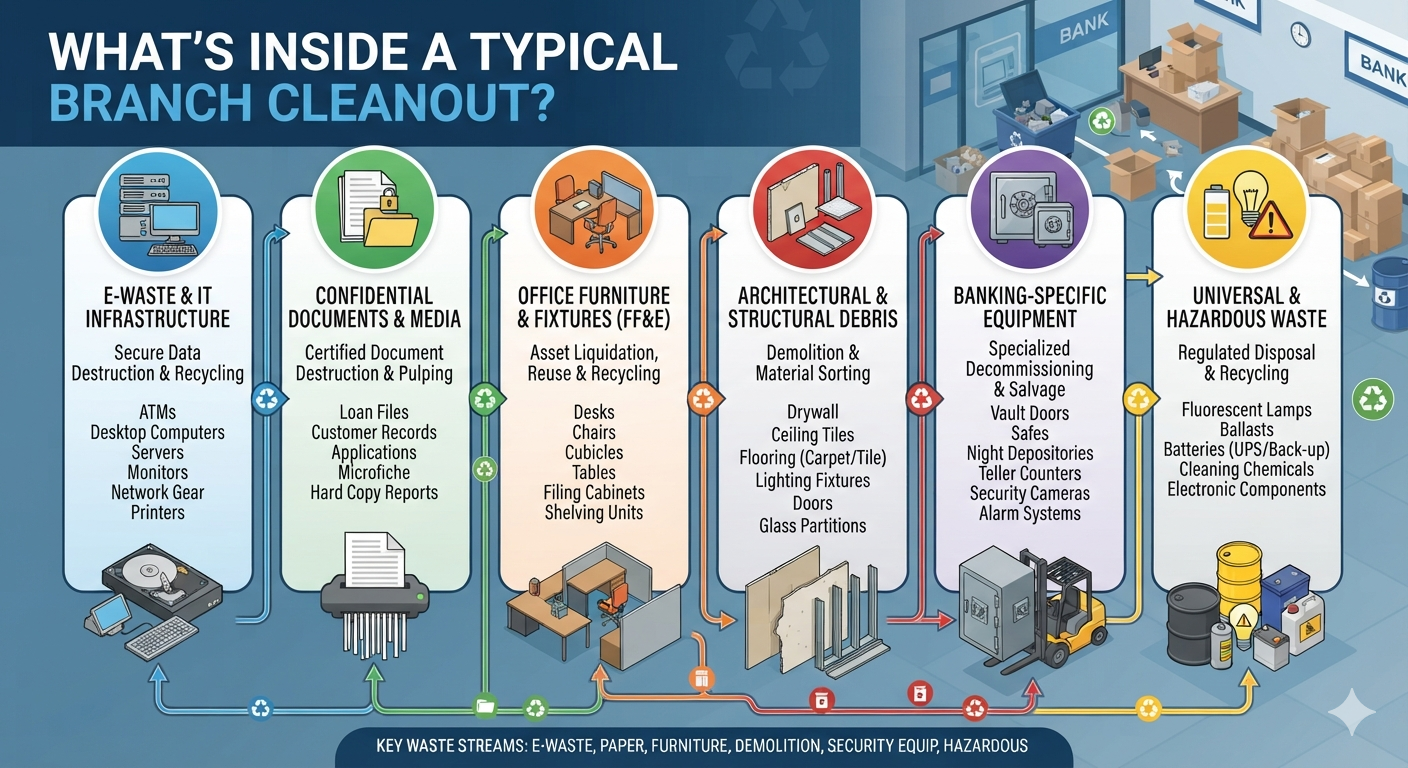
Typical materials generated during a branch cleanout include:
- Office furniture such as desks, cubicles, chairs, shelving, and filing cabinets.
- Computer equipment, printers, networking hardware, monitors, and other electronics.
- Confidential paper records requiring secure destruction.
- Construction debris generated during renovations or remodeling.
Each of these materials has different disposal requirements. Some can be recycled, others require certified destruction, while many still have value through reuse or resale. Treating everything as general trash often results in higher disposal costs and unnecessary landfill waste.
Planning Furniture and Equipment Removal
Office furniture is often one of the largest contributors to cleanout costs, yet it’s also one of the biggest opportunities for savings.
Instead of automatically disposing of every desk, chair, or filing cabinet, financial institutions should first evaluate whether those assets can continue providing value elsewhere. A structured asset review before demolition or removal frequently uncovers opportunities to reduce both disposal expenses and future purchasing costs.
Before scheduling removal, classify major assets into categories such as:
- Relocate to another branch or office
- Donate or resell
- Recycle materials
- Dispose only when no other option exists
This simple planning exercise often diverts substantial material from landfills while reducing the number of containers, pickups, and disposal fees required during the project.
The same philosophy applies to office technology. Printers, copiers, networking equipment, ATMs, and other electronics may qualify for manufacturer take-back programs, certified recycling, or resale depending on their condition.
Managing Confidential Document Disposal
Financial institutions operate under strict privacy and record retention requirements, making document management one of the most sensitive aspects of any branch consolidation.
Archived loan files, customer records, employee files, and financial documentation should never be discarded alongside general office waste. Secure document destruction should be incorporated into the project plan from the beginning rather than handled as an afterthought.
Likewise, electronic devices deserve equal attention. Servers, desktop computers, multifunction printers, hard drives, and backup devices often retain sensitive information long after they are removed from service. Certified data destruction helps protect customer information while reducing the risk of costly data breaches and regulatory violations.
By coordinating document shredding and electronic asset disposal alongside the overall cleanout schedule, institutions can simplify project management while maintaining compliance with privacy regulations.
Temporary Roll-Offs vs. Standard Waste Service
One of the most common mistakes during office consolidations is relying exclusively on existing dumpster service.
Routine waste collection is designed for predictable daily volumes – not the large quantities of furniture, fixtures, packaging, and renovation debris generated during a branch closure.
Temporary roll-off containers often provide a much more efficient solution. Their larger capacity allows contractors and facility teams to remove bulky materials quickly without overflowing existing dumpsters or scheduling numerous emergency pickups.
Depending on the project size, organizations may also benefit from using dedicated containers for different material streams. Separating recyclable materials from construction debris can improve diversion rates while reducing disposal costs.
Project-based hauling services also provide the flexibility to increase or decrease service frequency as the cleanout progresses, ensuring containers are available exactly when needed rather than paying for unnecessary scheduled service.
Opportunities for Recycling and Asset Recovery
Branch consolidations present one of the best opportunities many financial institutions will ever have to improve sustainability performance.
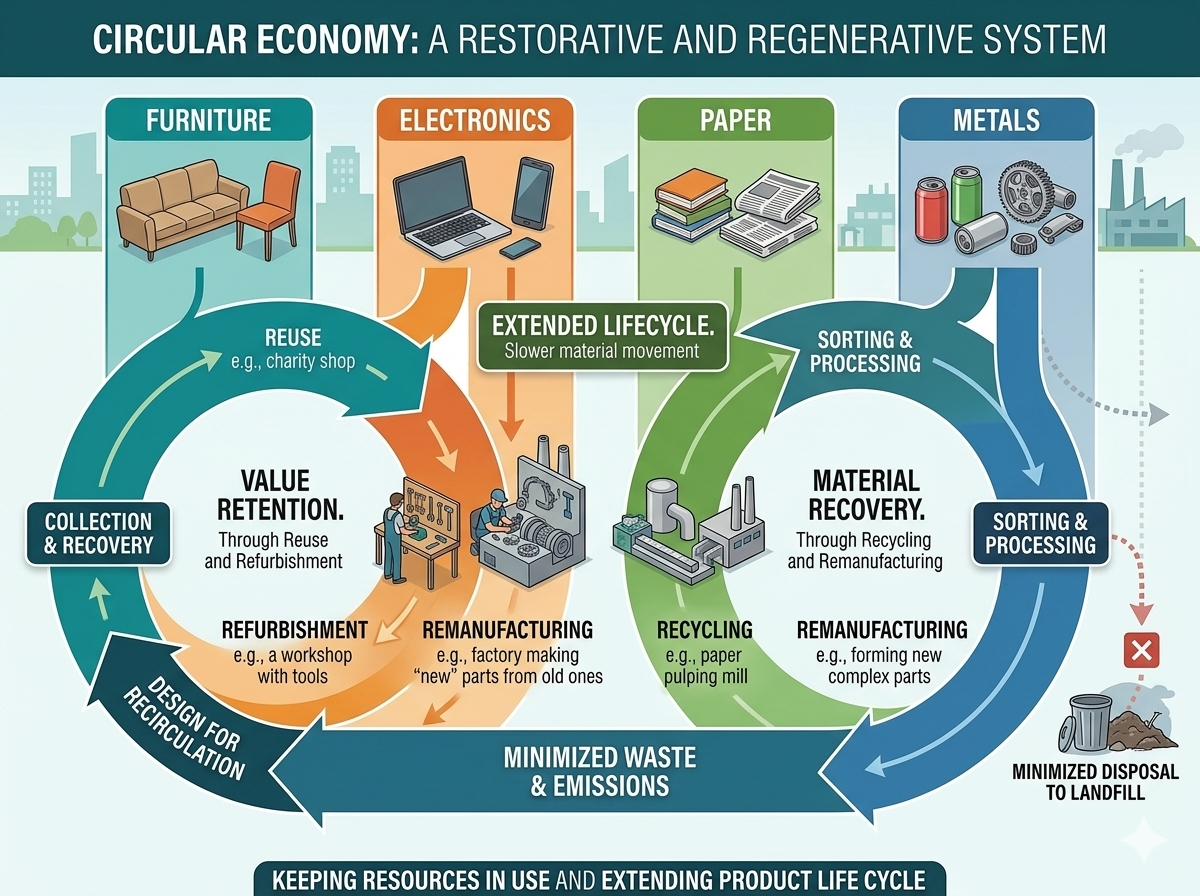
Instead of viewing a cleanout simply as a disposal project, organizations should evaluate how much material can remain in circulation through reuse, donation, refurbishment, or recycling.
Office furniture may continue serving another branch. Metal filing cabinets can be recycled. Cardboard packaging can be diverted into recycling programs. Electronics often qualify for certified e-waste recycling, allowing valuable materials to be recovered while preventing hazardous components from entering landfills.
These efforts do more than reduce disposal costs. They also support ESG initiatives, improve landfill diversion rates, and demonstrate responsible environmental stewardship to customers, investors, and regulators.
Organizations that document these diversion efforts may also strengthen their sustainability reporting while showcasing measurable environmental progress.
The Value of Early Waste Planning
One of the biggest drivers of unnecessary costs during branch consolidations is waiting until the project is already underway before developing a waste management strategy.
Planning early allows facility managers to coordinate vendors, schedule temporary equipment, identify recycling opportunities, and avoid costly last-minute service changes. It also keeps contractors productive by ensuring waste removal keeps pace with demolition and relocation activities.
Organizations that include waste management during the earliest planning stages are often able to:
- Reduce disposal costs through better service planning.
- Increase recycling and asset recovery opportunities.
- Minimize project delays caused by overflowing containers or scheduling conflicts.
- Improve compliance by coordinating secure document destruction and electronic recycling before equipment leaves the site.
Rather than becoming another logistical challenge, waste management becomes a coordinated part of the overall project plan.
Conclusion
Branch consolidations and office cleanouts can create complex waste challenges, but with proper planning, financial institutions can reduce disposal costs, protect sensitive information, and maximize opportunities for recycling and reuse.
National Waste Associates helps financial institutions simplify these transitions by coordinating temporary hauling services, secure document destruction, recycling programs, and nationwide vendor management. With the right strategy in place, organizations can complete consolidations more efficiently while keeping costs controlled and operations running smoothly.
Preparing for a branch consolidation or office cleanout? NWA can help streamline the process with customized waste solutions designed to reduce costs, improve efficiency, and ensure materials are handled properly from start to finish.
Learn more about our waste & recycling services by
calling 888-692-5005 x6 or sending us an
email at sales@nationalwaste.com
Frequently Asked Questions (FAQ)
furniture, electronics, confidential documents, and construction debris that require specialized handling, temporary equipment, and coordinated project planning.
Many materials – including office paper, cardboard, metals, electronics, wood, certain plastics, lighting components, and some construction materials – can often be recycled. Furniture may also be suitable for reuse, donation, or resale before disposal is considered.
In many cases, yes. Temporary roll-off containers provide the capacity and flexibility needed for large cleanout projects, helping prevent overflowing dumpsters, emergency pickups, and project delays while supporting more efficient waste removal.
Paper records containing sensitive information should be securely shredded through certified document destruction providers. Electronic devices should undergo certified data destruction before recycling or disposal to protect customer information and maintain regulatory compliance.
Absolutely. Reusing furniture, recycling materials, recovering electronic equipment, and reducing landfill disposal all contribute to stronger ESG performance while helping organizations demonstrate measurable progress toward their sustainability objectives.
National Waste Associates helps financial institutions plan and manage office cleanouts from start to finish. We coordinate temporary waste solutions, project-based hauling, secure document destruction, electronics recycling, asset recovery opportunities, and vendor management to help organizations reduce costs, maintain compliance, maximize recycling, and complete branch consolidations as efficiently as possible.
 BIC License #1496