Small Footprints, Big Challenges: Managing Waste in Tight Restaurant Spaces

Table of Contents
NWA
Space is one of the most valuable – and limited – resources in the restaurant industry. From compact urban storefronts to high-rent shopping centers, many operators are forced to maximize every square foot of their footprint. While this often leads to creative kitchen layouts and streamlined operations, one area that frequently gets overlooked is waste management.
Limited space doesn’t eliminate waste – it complicates it. Without the right strategy, tight back-of-house areas can quickly become overcrowded, unsanitary, and inefficient. The result is higher costs, operational disruptions, and increased risk of compliance issues.
Managing waste in small spaces requires a thoughtful, strategic approach – one that balances efficiency, cleanliness, and practicality without compromising day-to-day operations.
Quick Hits: What Restaurant Operators Need to Know
- Limited space can lead to overflow, sanitation issues, and workflow inefficiencies
- Improper container sizing often results in higher costs or operational strain
- Increasing pickup frequency can offset space constraints – but must be managed carefully
- Shared waste areas introduce coordination and accountability challenges
- Clean, well-organized waste areas are essential for health compliance
The Challenges of Limited Back-of-House Space
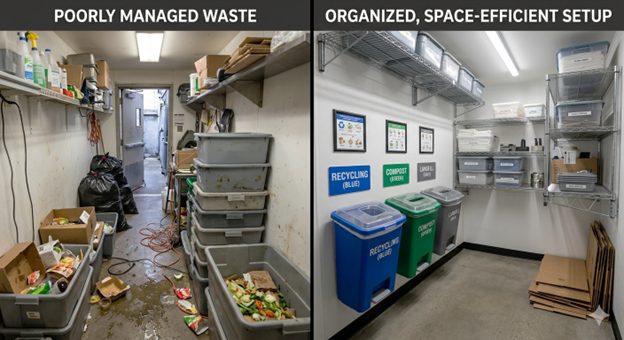
Restaurants operating in tight environments face a unique set of constraints. Kitchens are often designed for maximum productivity, leaving little room for waste storage. As a result, dumpsters, recycling bins, and organic waste containers are frequently squeezed into already crowded areas.
This lack of space creates several operational challenges. Staff may struggle to move efficiently when waste builds up, and improper storage can lead to clutter, odors, and sanitation concerns. In extreme cases, waste can spill into areas intended for food prep or employee movement, increasing the risk of health code violations.
Unlike larger facilities that can absorb inefficiencies, small-footprint restaurants must operate with precision. Waste management, therefore, becomes a critical part of maintaining a safe and functional workspace.
Choosing the Right Container Sizes and Types
In tight restaurant spaces, container selection is one of the most important decisions operators can make. The wrong container can either take up too much space or fail to meet capacity needs – both of which create problems.
Rather than defaulting to standard sizes, restaurants should evaluate their specific waste generation patterns and available space. Smaller, more compact containers may be better suited for daily operations, especially when paired with more frequent service.
At the same time, specialized equipment – such as slim-profile bins or stackable containers – can help maximize limited space without sacrificing functionality.
A thoughtful approach to container selection allows restaurants to maintain efficiency while minimizing clutter and disruption.
Increasing Pickup Frequency Without Increasing Costs
One of the most effective ways to manage waste in a small footprint is to increase pickup frequency. By removing waste more often, restaurants can operate with smaller containers and avoid overcrowding.
However, increasing service frequency can also lead to higher costs if not managed properly. The key is finding the right balance between container size and pickup schedule.
For example, a restaurant may benefit from:
- Downsizing container volume while increasing service frequency
- Adjusting pickup schedules based on peak business days
- Eliminating unnecessary pickups during slower periods
When aligned correctly, these adjustments can maintain efficiency without driving up expenses.
Shared Waste Areas and Multi-Tenant Complexities
Many restaurants – especially those in urban environments or shopping centers – share waste areas with other businesses. While this can save space, it introduces a new layer of complexity.
Shared waste areas often lead to:
- Overfilled containers due to multiple users
- Lack of accountability for improper disposal
- Increased contamination of recycling or organic waste streams
These challenges can create tension between tenants and lead to higher service costs or compliance issues.
To navigate this environment, restaurants need clear processes and communication. Coordinating with property managers, ensuring proper signage, and working with reliable waste service providers can help maintain order and accountability.
Maintaining Cleanliness in High-Traffic Environments
In small restaurant spaces, cleanliness is not just a matter of appearance – it’s essential for safe and efficient operations. Waste areas that are not properly maintained can quickly become breeding grounds for bacteria, odors, and pests.
Because space is limited, even minor lapses in cleanliness can have an outsized impact. A single overflowing bin or missed pickup can disrupt workflows and create unsanitary conditions.
Maintaining cleanliness requires consistency. This includes regular waste removal, proper container usage, and ongoing monitoring by staff.
Restaurants that prioritize cleanliness in their waste management processes are better positioned to maintain compliance and protect both employees and customers.
Preventing Odors and Pest Issues
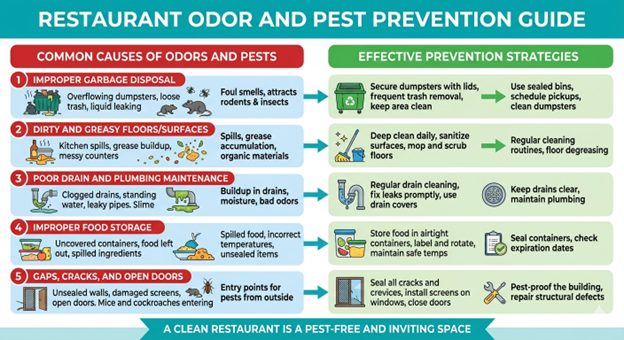
Odors and pests are among the most common – and most disruptive – issues associated with poor waste management in tight spaces. When waste is stored too long or not properly contained, it creates an environment that attracts insects and rodents.
These problems can escalate quickly, especially in warm or humid conditions. Once pests are present, they can be difficult and costly to eliminate, often requiring professional intervention.
Preventative measures are essential. Proper waste separation, secure container lids, and consistent service schedules all help minimize these risks.
In smaller spaces, where waste is closer to food preparation and storage areas, these precautions become even more critical.
Designing Efficient Waste Workflows for Staff
In a fast-paced restaurant environment, efficiency is everything. When waste management processes are poorly designed, they can slow down staff, create confusion, and increase the risk of errors.
In tight spaces, even small inefficiencies are magnified. Staff may need to navigate around waste containers, deal with overfilled bins, or spend extra time managing disposal tasks.
Designing an efficient workflow involves:
- Placing containers in accessible, logical locations
- Clearly labeling waste streams
- Training staff on proper disposal procedures
When waste processes are integrated seamlessly into daily operations, staff can focus on their primary responsibilities without unnecessary interruptions.
Turning Space Constraints into Operational Efficiency
While limited space presents challenges, it also creates an opportunity for restaurants to operate more efficiently. Tight environments require intentional decision-making, which can lead to better systems and processes.
By optimizing container usage, aligning pickup schedules, and maintaining clean, organized waste areas, restaurants can turn a potential liability into a strength.
The result is a more streamlined operation – one that supports staff productivity, maintains compliance, and controls costs.
In an industry where margins are tight and expectations are high, these efficiencies can make a meaningful difference.
National Waste Associates is here to help you optimize your restaurant’s waste operations!
Learn more about our waste & recycling services by
calling 888-692-5005 x6 or sending us an
email at sales@nationalwaste.com
Frequently Asked Questions (FAQ)
Restaurants can optimize waste management by using appropriately sized containers, increasing pickup frequency, and organizing waste areas for efficiency and cleanliness.
In many cases, yes. Smaller containers paired with optimized pickup schedules can help prevent overflow and improve space utilization without significantly increasing costs.
Risks include sanitation issues, pest infestations, operational inefficiencies, and potential health code violations.
Shared spaces can lead to overuse, contamination, and lack of accountability. Clear communication and proper labeling are essential to maintaining order.
Consistent waste removal, proper container sealing, and effective waste separation are key to minimizing odors and preventing pests.
Proper training ensures that waste is handled correctly, reduces contamination, and helps maintain a clean and efficient work environment.
 BIC License #1496