
Why IT, Facilities, and Finance All Struggle with E-Waste Ownership
Technology organizations are constantly cycling through hardware. Laptops are replaced, servers are upgraded, offices expand, and equipment moves between teams and locations. But when devices reach the end of their useful life, many tech companies face the same quiet problem: no one is clearly responsible for e-waste disposal.
IT manages devices while they’re in use. Facilities manages buildings and waste vendors. Finance tracks assets and depreciation. When equipment is retired, ownership often falls into a gray area between all three. The result is delayed disposal, unsecured storage, compliance risk, and unnecessary costs – issues that grow as companies scale.
How E-Waste Gets Lost Between Departments
In most technology organizations, e-waste ownership is never formally assigned. IT teams are focused on deployment, security, and support – not disposal logistics. Facilities teams may handle waste services, but often lack visibility into which devices are ready for retirement. Finance knows when assets are fully depreciated, but typically isn’t involved in physical removal or destruction.
Because responsibility is fragmented, retired equipment often sits idle. Storage rooms fill with outdated laptops. Server closets become informal graveyards for old hardware. Devices are moved during office relocations without clear records of their status or disposition.
Why Delayed E-Waste Disposal Creates Real Risk
Storing obsolete equipment might feel low-risk, but it introduces serious exposure over time. Devices may still contain sensitive data, proprietary information, or credentials that were never properly wiped. Unlike active IT environments, storage rooms and back offices are rarely secured or monitored at the same level.
From a compliance standpoint, extended storage also raises questions during audits or security reviews. Organizations may struggle to prove that equipment was handled responsibly or disposed of in a timely manner. The longer devices sit, the harder it becomes to track their chain of custody or confirm their final outcome.
Idle e-waste can pose major security risks. As shown in the chart below, finance and technology generate the highest amount of data breaches across all industries.
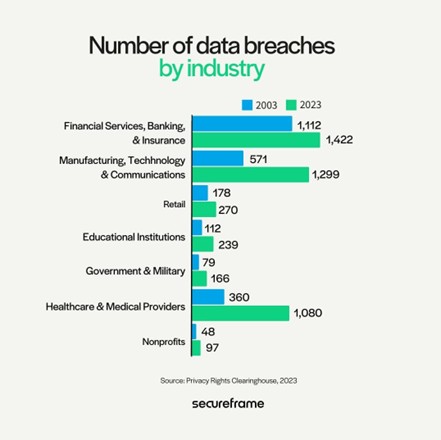
Image provided by secureframe.com
The Compliance Challenges of Fragmented Ownership
Technology companies operate under increasing scrutiny related to data security, environmental responsibility, and regulatory compliance. When e-waste processes vary by department or location, consistency becomes difficult to maintain.
Without centralized ownership, documentation tends to be incomplete or scattered. Disposal vendors may differ by office. Reporting on e-waste volumes, recycling outcomes, or destruction certificates becomes manual and unreliable. These gaps don’t always cause immediate problems – but they often surface at the worst possible time, such as during an audit or customer security review.
The Financial Cost of Unclear E-Waste Responsibility
E-waste confusion has financial consequences that are easy to overlook. Finance teams may continue tracking assets that are no longer in use, while facilities teams pay to store equipment that should have been removed. In some cases, companies miss opportunities to recover value through resale or refurbishment simply because devices sit too long.
Over time, these inefficiencies add up. What starts as a storage issue becomes an ongoing operational cost, compounded by administrative time spent tracking down equipment or reconciling asset records.
Where Centralization Makes the Biggest Difference
Centralized e-waste management introduces clarity where there was once confusion. When responsibility is clearly assigned – either internally or through a coordinated partner – disposal becomes predictable and repeatable rather than reactive.
A centralized approach typically provides:
- A single point of accountability for end-of-life equipment
- Defined handoffs between IT, Facilities, and Finance
- Standardized disposal and recycling procedures across locations
- Consistent documentation and reporting
This structure reduces delays, lowers risk, and ensures everyone understands their role in the process.
Turning E-Waste into a Repeatable Operational Process
The most effective technology organizations treat e-waste like any other operational workflow. Devices are flagged for retirement, approved for removal, and processed through a consistent system. This removes ambiguity and prevents equipment from piling up unnoticed.
Clear processes also make scaling easier. As companies add offices, data centers, or remote teams, e-waste management doesn’t become more chaotic – it stays consistent.
Why Visibility Is the Missing Link
One of the biggest challenges in e-waste management is visibility. Without centralized tracking, it’s difficult to know how much e-waste exists, where it’s located, or how it’s being handled. Visibility gaps make it harder to manage risk and harder to tell a clear sustainability or compliance story.
Centralized reporting allows organizations to monitor volumes, track disposal timelines, and support internal audits. It also helps identify inefficiencies before they become costly problems.
How National Waste Associates Helps Technology Companies Take Control
National Waste Associates helps technology companies eliminate confusion around e-waste ownership by providing centralized oversight, consistent processes, and clear visibility across all locations. NWA coordinates responsible e-waste handling, manages vendor relationships, and supports documentation and reporting – so nothing falls through the cracks.
By serving as a single point of accountability, NWA aligns IT, Facilities, and Finance around a clear, repeatable approach to e-waste management. The result is reduced risk, improved efficiency, and confidence that end-of-life equipment is handled securely and responsibly.
Learn more about how NWA can help your organization
with its e-waste management by
calling 888-692-5005 x6 or sending us an
email at sales@nationalwaste.com
 BIC License #1496